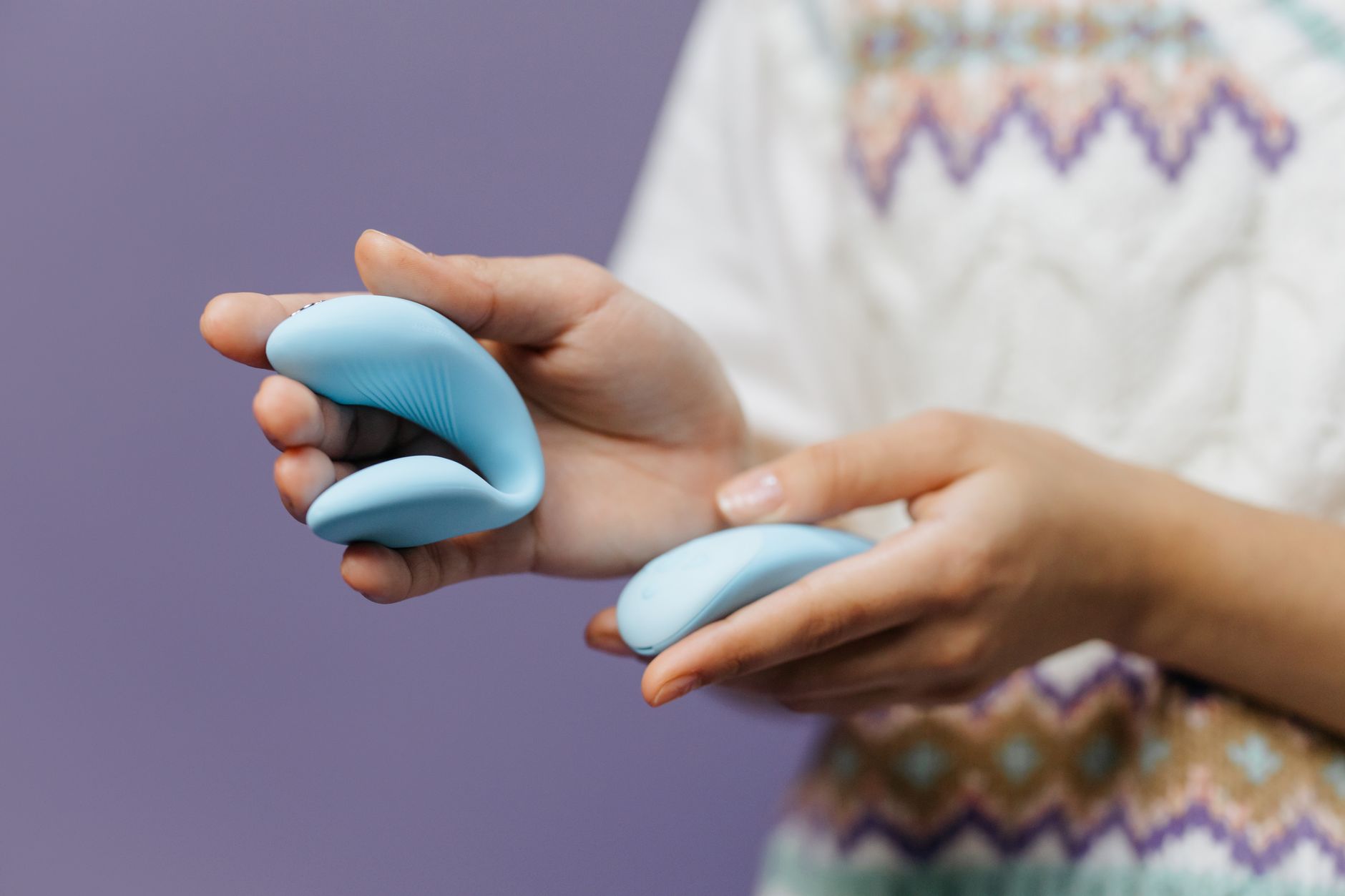
Here's the thing nobody warns you about when you stop birth control
You quit hormonal contraception expecting to feel lighter. Clearer skin, maybe. Less mood swings. What nobody mentions is that your clitoris is about to wake up. Not just feel different. Literally wake up. The same touch that felt okay before feels almost overwhelming now. A lemon vibrator, which uses precision suction instead of direct vibration, is often the exact right tool for this exact transition.
Let's talk about why this happens and what to do about it.
Why sensitivity skyrockets after stopping the pill
Hormonal birth control does something most people don't realize: it dampens genital sensitivity. Not permanently. It's actually reversible, which is the good news. Here's the mechanism.
Estrogen and progestin in hormonal contraceptives suppress your natural hormone cycles. They keep testosterone (which everyone produces, regardless of biology) lower and more stable. Testosterone is the hormone most directly linked to clitoral sensitivity and responsiveness. When you're on the pill, you're running at a steadier, lower baseline. Your clitoris is there, but it's operating under chemical modulation.
When you stop, testosterone starts cycling again with your natural menstrual rhythm. In the follicular phase especially, testosterone climbs. Your clitoris becomes more engorged with blood, tissue thickness increases slightly, and nerve endings become more reactive. It's not broken. It's responsive. That's actually the intended design of your body. The pill was just smoothing it out.
This heightened sensitivity typically peaks about 4 to 8 weeks after stopping hormonal contraception, though some people feel the shift almost immediately.
Why direct vibration might feel too intense right now
If you've been using a traditional lemon sucker or clitoral vibrator before and it felt fine, the same toy might now feel jarring or even uncomfortable. This is normal. Here's why.
Direct vibration stimulates nerve endings through rhythmic mechanical pressure. When your tissue is more sensitive and more engorged, that same pressure translates to more stimulation reaching your nervous system. It's not proportional. A toy that was a 6 out of 10 intensity before can feel like an 8 or 9 now. Some people describe it as overstimulation. Others say it's almost painful, though not in an injury way. More in a too-much-too-fast way.
This is where a lemon clitoral vibrator becomes essential. Instead of direct vibration, lemon vibrators use gentle suction and pulsing air wave technology. This stimulates the clitoris indirectly, through the tissue around it, rather than hammering the nerve endings directly. For newly sensitive bodies, it often feels like relief.
How to restart with a lemon vibrator on high sensitivity
Three things change when you're adjusting to post-pill sensitivity.
Start at the lowest setting. If you're new to a lemon vibrator, begin at pattern 1 or 2. If you've used one before, you might need to drop down a full 2-3 levels from where you left off. Your body is different now. Honor that. You can always build up.
Position matters more. With direct vibration, micro-adjustments in angle were nice. With a lemon clitoral vibrator's suction-based design, position is critical. The opening should sit fully over the clitoral head (or slightly off-center if full coverage feels too intense). This distributes stimulation more evenly and prevents that overwhelming single-point pressure. Experiment with small shifts until it feels right, not intense.
Extend your warm-up timeline. This sounds counterintuitive. Your body is more sensitive, so won't it warm up faster? Not necessarily. Arousal and sensation are two different systems. Spend 10 to 15 minutes on foreplay, partnered touch, or mental arousal building before you introduce the lemon vibrator. This primes your body without overwhelming it. Once you've already begun to pleasure yourself, introducing the toy feels like building on sensation rather than launching directly into it.
The pleasure upside you're actually experiencing
Feel free to reframe this. You didn't lose sensitivity to pleasure. You gained it. Many people who come off hormonal birth control report that orgasms become easier, more intense, or more frequent. This isn't your imagination. It's backed by research on how hormonal contraception affects sexual response.
You might also notice that sensation feels more localized and sharper than it did before. Blunter, maybe. That difference can feel strange at first. But most people, once they adjust their technique, find it's actually more enjoyable. You can feel what's happening in real time. You're not fighting through a fog of hormonal suppression.
This is also the reason why your libido might have jumped. Testosterone doesn't just control sensitivity. It's the primary hormone driving desire. Off the pill, you might find you want sex or solo pleasure more often. That's not a side effect. That's baseline human sexuality that was chemically quieted and is now returning.
When to worry versus when to adjust
There's a difference between heightened sensitivity (which feels intense but good) and pain or irritation (which doesn't). If you're experiencing sharp pain, burning, or irritation that doesn't ease after stopping the toy, see a doctor. This could be a skin sensitivity to toy material, an infection, or something else entirely. Not common, but worth ruling out.
Heightened sensitivity that feels pleasurable but intense? Totally normal. Adjust settings, positioning, and warm-up time. Most people find their sweet spot within 2 to 3 weeks of consistent experimentation.
One more note: if you quit birth control for reasons related to mood or energy, be patient with yourself during this sexual adjustment period too. Returning sensitivity is a physical change, but you're also navigating emotional and relational shifts. That context matters.
Fine-tuning your technique over time
As your hormones stabilize over the next 8 to 12 weeks, you'll likely find your sensitivity settles into a new normal. Not back to where it was. Different. Usually better. During this time, keep testing. Maybe week two you can handle level 3. Week five you want level 4. Or maybe you never want to go higher than level 2, and that's fine. There's no "correct" intensity. There's only what works for your body right now.
If you're partnered and restarting intimacy, consider using a lemon vibrator solo first. This gives you space to recalibrate without the dynamics of a partner's expectations or timing. Once you know what feels good alone, introducing it to partnered play becomes easier. You're not discovering the toy while also managing someone else's reaction. You're coming to the table with knowledge.
Many people find that sensitivity shifts after stopping birth control can actually strengthen solo pleasure and self-knowledge. You're learning your body as it actually is, without chemical modulation. That knowledge is useful forever.
The emotional side of recalibration
There's often a psychological component to sensitivity changes that gets overlooked. If you've been on hormonal birth control for years (often since your teens or twenties), you might not actually remember what unmodified sensitivity feels like. This return can feel almost shocking. Some people experience it as wonderful. Others feel destabilized.
Both are valid. Your body is literally different. Give yourself grace. If heightened sensitivity is uncomfortable at first, that doesn't mean something is wrong. It might just mean you need time to adjust your expectations and your technique. A lemon vibrator, with its gentler suction-based design, is often the bridge that makes that adjustment easier.
If you're in a relationship, communicate. "My body is recalibrating. This feels different, and I need to explore what that means." Your partner doesn't need to know every detail. But they should know you're in a transition and that your preferences might shift. This is actually a useful time to reset conversations around pleasure anyway.
FAQ
How long does heightened sensitivity last after stopping birth control?
Most people experience peak sensitivity around 4 to 8 weeks after stopping hormonal contraception. After that, sensitivity typically settles into a new baseline within 3 to 4 months as your hormone cycle re-establishes. This doesn't mean it goes away. It means your body learns the new rhythm and your pleasure response recalibrates around it. Some sensitivity changes persist long-term because your baseline testosterone is genuinely higher off the pill.
Can I use the same lemon clitoral vibrator settings I used before?
Probably not immediately. If you were using level 5 before, you might feel comfortable at level 2 or 3 now. This changes as your body adjusts. The good news is a lemon vibrator's graduated intensity options let you dial in exactly what you need. Start low, be patient, and work up as comfort increases. This usually takes 2 to 3 weeks of regular use.
Is heightened clitoral sensitivity after stopping birth control normal?
Completely normal. Hormonal contraception suppresses baseline testosterone and moderates your clitoral blood flow. When you remove that suppression, sensitivity returns. This is your body functioning as designed. It might feel strange if you've been on the pill since your teens, but increased sensitivity is a feature, not a bug.
Should I switch to a different type of toy entirely?
Not necessarily. If you loved a lemon vibrator before, you likely still will. You just need to adjust settings and positioning. That said, if direct vibration consistently feels too intense even at the lowest level, a lemon vibrator's suction-based approach might genuinely suit your new sensitivity better. Some people find they prefer this design permanently after experiencing heightened sensitivity.
What if my sensitivity doesn't feel good, just uncomfortable?
There's a difference between intense and uncomfortable. Intense pleasure can feel electric and sharp. Uncomfortable means pain, burning, or that sensation of wanting to pull away. If you're consistently uncomfortable, it could be a toy material sensitivity, a skin issue, or something else. See a gynecologist if discomfort persists beyond your adjustments. Heightened sensitivity should feel good, even if it's different than before.
How do I introduce a lemon vibrator to a partner when I'm recalibrating sensitivity?
Start the conversation separate from sex. "I stopped taking the pill and my body feels different. I'm exploring what works for me now with a new toy." You don't need their permission or their enthusiasm. You're sharing information. If they want to be part of it, great. If you need solo time to figure yourself out first, that's also great. How to introduce a lemon vibrator when navigating a partner dynamic is its own conversation worth having thoughtfully.