Here's what nobody tells you
When your partner deals with sexual dysfunction, the conversation usually focuses on them. What about your pleasure? That gap between desire and what's actually happening can hollow out intimacy faster than the dysfunction itself. The good news: your pleasure doesn't have to pause while your partner figures things out.
This is where tools like lemon vibrators matter. Not as a replacement for your partner or a Band-Aid on a bigger problem, but as a way to stay connected to your own body while you both navigate something genuinely difficult.
The silent cost of partnered sexual dysfunction
When erectile dysfunction, premature ejaculation, or other sexual health issues show up, most couples focus entirely on fixing the problem. Sex becomes task-oriented. Performance-focused. The pressure builds, and pleasure evaporates for both of you.
Here's what I see in my practice: the partner without the dysfunction often stops touching themselves entirely. There's guilt. There's the fear that solo pleasure feels like rejection. There's shame around wanting something your partner can't currently give. Over months, that disconnect from your own body creates real damage to the relationship. You stop knowing what you want. You lose the ability to ask for it.
Meanwhile, your partner is stressed about performance, and you're stressed about being supportive, and nobody's actually having pleasure anymore.
Why lemon vibrators work during this transition
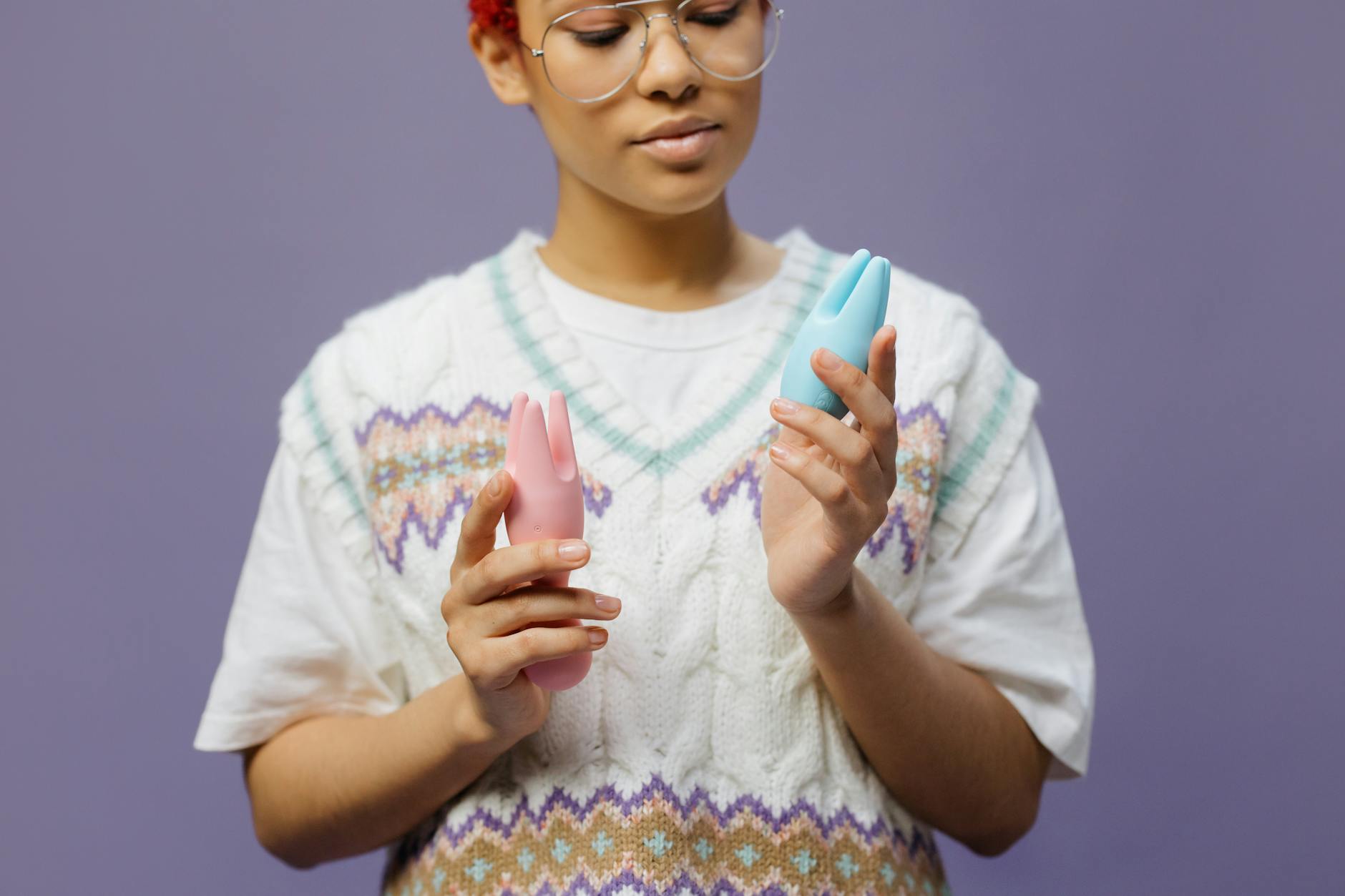
Lemon clitoral vibrators, particularly ones that use suction rather than direct vibration, work because they're not about speed or intensity. They're about sensation. Rhythm. The ability to explore what feels good without the pressure of someone else's performance or timeline.
There's also something psychologically important happening. When you use a lemon vibrator solo, you're saying to your body and your brain: your pleasure matters independently. It's not contingent on your partner's ability to perform. That's not selfish. That's self-preservation during a difficult time.
The lem vibrator's design is particularly useful here because suction stimulation feels fundamentally different from penetration or traditional vibration. It creates sensation without requiring the kind of sensitivity that might feel overwhelming if you're already anxious or holding tension from relationship stress.
Building your own baseline
One of my favorite exercises during sexual dysfunction counseling is the "pleasure reset." It's simple: you spend two to three weeks with solo play only. No partner contact. Your job is to rediscover what makes your body respond without any performance pressure.
A lemon clitoral vibrator is ideal for this because it gives you control. You set the pattern. You set the rhythm. You decide when to increase intensity or back off. Most people find that after two weeks of this, they remember what their own pleasure actually feels like. Not what they think they should want. Not what they're performing for someone else. What actually works for their body.
Start with the lower settings. Lemon vibrators often have five to seven intensity levels. Many people recovering from relationship stress do best starting at level one or two. Let your body warm up. Most of us are holding tension somewhere—shoulders, jaw, pelvic floor. Take 15 to 20 minutes just to arrive in your own body.
Using solo play alongside partnered intimacy
Once you've reconnected with your own baseline, you can weave solo play back into partnered time. This isn't about excluding your partner. It's about broadening what intimacy looks like.
For example: you and your partner can be intimate together while you use a lemon vibrator. You get stimulation. He gets to participate without the pressure of being the sole source of your pleasure. It removes the performance requirement that's often at the root of dysfunction in the first place. You're not waiting for him to "do it right." You're both working toward your pleasure together.
I also recommend what I call "parallel play." You're in the same room. You might be touching, or just close. But you're each attending to your own pleasure. It sounds clinical written down. In practice, it's often deeply intimate because there's no performance, no pressure, just two people who care about each other staying connected.
The conversation you actually need to have
None of this works if you're not talking about it. And I mean real talking, not just mentioning it once.
If your partner is struggling with ED or PE, they're already anxious. Bringing up your own pleasure needs might feel like you're piling on. But avoiding it guarantees resentment. Here's how to do it: separate the two conversations. "I love you and I want us to stay connected" is conversation one. "I need ways to access my own pleasure during this time" is conversation two.
With your partner: "I've been thinking about my own pleasure separately from what we do together. I'm going to explore that with solo tools sometimes. I want you to know that has nothing to do with how I feel about you. It's about me staying connected to my own body while we work through this."
That's honest, it's not blaming, and it opens space for him to do the same.
When to involve a specialist
Sexual dysfunction is often medical. If your partner hasn't seen a doctor, that's step one. ED can signal cardiovascular issues. PE might be hormonal or psychological. A good GP can rule out treatable causes and might suggest medication, therapy, or both.
If the emotional weight is heavy (and it usually is), a sex therapist is different from a general therapist. We're trained in the specific intersection of physiology, psychology, and relationship dynamics. A few sessions can completely change how a couple approaches dysfunction.
Your pleasure exploration with a lemon vibrator is not a substitute for that support. It's a tool you use while the deeper work happens.
The long view
Most sexual dysfunction is temporary if you treat it. ED responds to medication or lifestyle changes. PE responds to therapy or desensitization techniques. What doesn't always recover is the pleasure and confidence that got lost along the way.
Using lemon sexual toys to stay connected to your own pleasure during this time protects that. You're not waiting passively for your partner to heal. You're actively maintaining your capacity for sensation, desire, and orgasm. When he does recover, you're ready to meet him there. You're not starting from zero.
Your pleasure matters independently. Remember that.
FAQ: Lemon Vibrators and Partner Dysfunction
Can I use a lemon vibrator if my partner is anxious about it?
Yes, and communication matters enormously. Many partners worry that solo toys mean you're not attracted to them or that you're replacing them. Reframe it clearly: "This helps me stay connected to my own body while we work through this together." Anxiety often softens when he understands it's not about him. Some couples find that watching or being present during solo play actually reduces his performance anxiety over time because he sees that your pleasure doesn't depend entirely on his performance.
Should I use a lemon vibrator during partner sex if he's struggling with ED or PE?
Yes, if you both agree. For ED specifically, it removes the pressure for penetration to be the main event. You can use a clitoral lemon vibrator during foreplay or alongside whatever else is happening. For PE, it gives you something to focus on independently of his ejaculation timeline. Talk about it first, but most couples find it reduces anxiety for both partners because the goal is clearly mutual pleasure, not performance.
How often should I use solo play tools during this time?
There's no rule. Some couples find that three to four times a week maintains connection to pleasure. Others do it daily. The goal isn't frequency, it's consistency. You're rebuilding trust in your own body's capacity for sensation. Set a rhythm that feels sustainable to you, not one that feels like another obligation.
Does using a lemon vibrator solo make partnered sex less enjoyable?
The opposite is usually true. When you know your body, when you trust your own pleasure, partnered sex gets better because you can actually communicate what works. You're not performing or guessing. You know. That clarity benefits both of you.
Can my partner and I use a lemon clitoral vibrator together if he has erectile issues?
Completely. This is actually one of the most helpful uses. He can use the vibrator on you while managing his own body without the pressure of penetration. It keeps you both engaged, removes performance anxiety, and often feels more intimate because there's no pressure. Many couples discover they prefer this even after ED resolves.
What if my partner feels threatened by lemon vibrators?
That's worth addressing directly, ideally with a therapist. Insecurity about toys usually points to deeper anxiety about his adequacy. A few sessions with a sex therapist can help him understand that toys are tools for mutual pleasure, not replacements. In some cases, watching or participating in your solo play actually builds his confidence because he sees that you're having pleasure and he's part of that journey, even if not in the traditional way.
How long does it usually take to rebuild pleasure after partner dysfunction affects intimacy?
It varies wildly. Some couples shift back within weeks. Others take months. The timeline depends on whether the underlying dysfunction is being treated, whether you're both committed to reconnecting, and how much resentment built up. Solo pleasure tools speed this up because you're not waiting for your partner to be ready. You're maintaining your own baseline while you both heal.
The real takeaway
Sexual dysfunction doesn't have to mean the end of your pleasure. It means a temporary shift in how you access it. Lemon vibrators, lem vibrators, and other clitoral vibrators give you a way to stay connected to sensation, desire, and your own body while your partner heals. That's not selfish. That's smart. That's how couples actually get through this without losing themselves in the process.
If you're navigating this right now and you need support beyond solo tools, reach out. That's what we're here for.