Let's get real about desire
Low sex drive shows up quietly. You don't wake up one day thinking "I've lost interest in sex." Instead, you notice you're not thinking about it. Your partner initiates and your body doesn't respond the way it used to. Or you scroll through your phone instead of reaching for them. And then comes the guilt, the pressure, the sense that something is broken.
It's not broken. Low desire is one of the most common intimacy issues couples face, and it has almost nothing to do with how much you love someone. It's usually fatigue, stress, hormonal fluctuation, medication side effects, or some combination of all of those things grinding against each other.
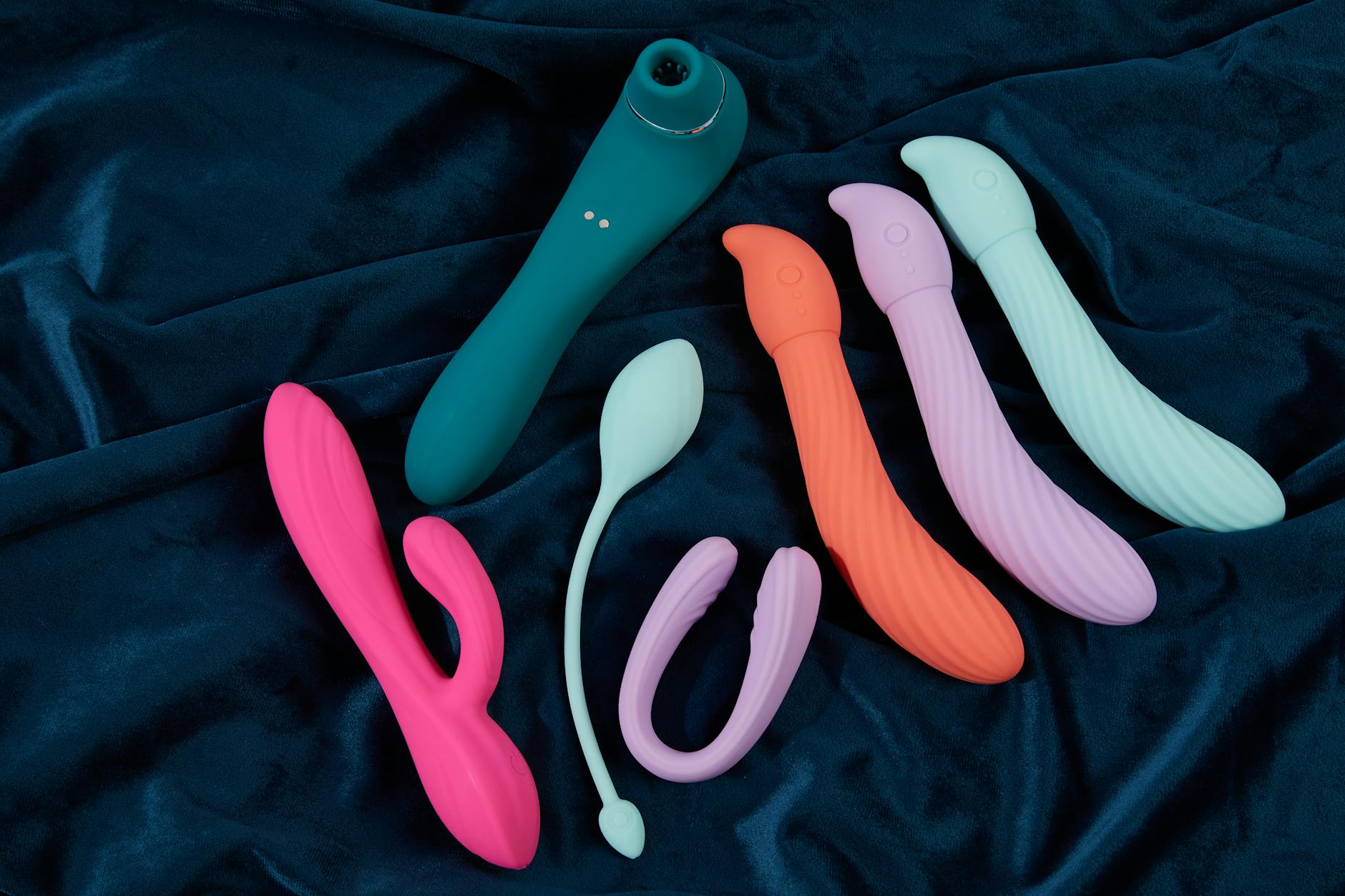
Here's the part no one talks about: a lemon clitoral vibrator works differently when desire is low. When arousal is easy, toys amplify what's already happening. When arousal takes effort, a good clitoral vibrator becomes a permission slip. It short-circuits the mental resistance and lets your body lead for once.
Why traditional desire-building advice doesn't work
You've probably heard the suggestions. Set aside date night. Light candles. Talk about your feelings. Take a bath. All of those things are good, and none of them will fix low desire if the actual issue is burnout, stress hormones, or just being touched out from the demands of everyday life.
The reason is simple: you can't think your way into arousal when your nervous system is stuck in survival mode. Low desire usually means your body is in a hypervigilant state. You're managing too much. You're not sleeping well. You're holding tension you didn't even know was there. Asking yourself to want sex in that state is like asking yourself to enjoy a meal when you're nauseated. The logistics of pleasure matter less than the baseline.
But here's where toys change the equation: a lemon vibrator works because it removes the cognitive load. You don't have to wait for desire to arrive. You don't have to perform arousal. You can use the tool to generate sensation, and let your body respond to something tangible instead of waiting for some internal spark that isn't coming.
The neuroscience angle
When desire is low, the neural pathways for arousal get quieter. Your brain isn't sending the usual cascade of "go" signals to your genitals. A clitoral vibrator doesn't fix that directly. What it does is create such distinct, persistent stimulation that it drowns out the noise.
The lemon vibrator's suction mechanism is particularly useful here because it doesn't require the kind of direct pressure or friction that demands your clitoris to be already somewhat engaged. Suction stimulates the nerves in the vulva without requiring your body to meet it halfway. You can be neutral, almost disconnected, and still feel something building.
That matters when desire is absent. You're not forcing arousal. You're creating a stimulus strong enough that your body wakes up anyway.
How to actually approach it when desire is low
Three core principles change everything here.
First: separate pleasure from obligation. If using a lemon clitoral vibrator feels like another thing you're supposed to do to "fix" your desire, it becomes work. Frame it as exploration, not repair. Tell yourself you're allowed to feel nothing, or to feel something surprising, or to enjoy it without it meaning anything.
Second: start solo, always. When desire is low, partnered sex adds performance pressure. You're already worried about not being interested. Now you're also worried about your partner's experience, their feelings, whether they feel rejected. A lemon vibrator session alone removes that layer entirely. You can take however long you want. You can stop halfway through. You can sit with what you're feeling without narrating it.
Third: schedule it, but loosely. Low desire often lives in the gap between intention and follow-through. Tell yourself you're going to spend 20 minutes with your vibrator this week. Don't tie it to a specific night. Just make space for it. The scheduling removes the friction of deciding; the flexibility removes the pressure.
The practical toolkit
If you're using a lemon vibrator when desire is low, a few things make it work better:
Start at the lowest setting. Low desire often comes with a numb or disconnected feeling. Your clitoris might respond better to a gentler stimulus than you'd typically choose. The Lem vibrator's suction can feel intense even at lower intensities because of how the mechanism works. Let your body meet it slowly.
Use lube, even if you don't think you need it. Low desire often comes with low lubrication. It's not about being broken; it's physiology. Water-based lube removes friction and makes sensation clearer. It also signals to your brain that this is intentional pleasure, not obligation.
Give it at least 10 minutes before deciding if it's working. Arousal when desire is low doesn't come quickly. You're asking your nervous system to shift gears. That takes time. Many people feel nothing in the first 5 minutes and then something shifts around minute 8 or 9.
Have an exit plan. If you're not feeling it after 15 or 20 minutes, stop. Put the vibrator away. This isn't failure. You showed up. Your body gave you information. That's the win.
What's probably actually happening underneath
Low desire rarely lives alone. It usually brings friends.
You're stressed about something at work or with family, and that stress metabolizes into exhaustion. Your partner has been distant, and you've matched that distance without realizing it. You're on medication that flattens your libido as a side effect. You're in a phase of life where your bandwidth is genuinely full. Your relationship has tension you haven't fully addressed, and your body is protecting you by shutting down desire until that feels safe again.
A lemon clitoral vibrator won't fix any of those underlying issues. But it can create a space where you reconnect with the fact that pleasure is still available to you. That your body still works. That desire isn't the only path to physical sensation and satisfaction.
That reconnection matters. It reminds you that the low desire isn't permanent. It's a symptom of something else. And it's worth investigating what that something else actually is.
The conversation with your partner
If you're in a relationship, your partner probably notices the shift in desire. They might feel rejected. They might be confused. They might be doing their own internal work around what it means.
Using a lemon vibrator solo is partly about reclaiming your own pleasure. But it's also about buying yourself some space to think clearly. Once you've spent time reconnecting with your body, separate from expectation, you're in a better position to talk to your partner about what's actually going on.
You can tell them: "I've noticed my desire has shifted. I'm not sure why yet. I'm taking some time to explore that alone. This isn't about you. I want to understand what's happening in my own body before we figure out what this means for us."
That's honest. It takes the pressure off them. And it lets you do the work without an audience.
When to talk to someone else
If low desire has been consistent for more than a few months, if it's causing real strain in your relationship, or if it's accompanied by depression, anxiety, or other changes, talking to a therapist makes sense. Low desire is often a symptom that something in your life needs attention, whether that's stress management, relationship repair, medication adjustment, or processing something deeper.
A good therapist can help you distinguish between "I need to rest and I'm ignoring that signal" and "something in my relationship isn't working and my body knows it." Those are different problems with different solutions.
Using a lemon sexual toy is not therapy. But it can be a tool that gives you information. It can remind you that your pleasure capacity is intact. And sometimes that's enough to start shifting something that felt immovable.
The bigger picture
Desire isn't constant. It ebbs and flows based on stress, health, hormones, relationship dynamics, and life circumstances. Low desire isn't a character flaw or a sign that you've broken something. It's information.
If you're in a phase of low desire, reaching for a lemon vibrator isn't about forcing yourself to want sex. It's about creating an opportunity to feel sensation without the weight of expectation. Sometimes that's all you need to remember that pleasure is still there, waiting. Sometimes it's the first step in figuring out what's actually underneath the low desire.
Either way, you're allowed to take that step. Your pleasure matters. Even when desire is quiet.
People also ask
Can I use a clitoral vibrator if I don't feel aroused at all?
Yes. A lemon vibrator creates stimulation regardless of arousal level. You don't need to be turned on to feel physical sensation. The stimulus itself can trigger arousal, or it might just feel neutral at first. Both responses are fine. The point is giving your body a chance to respond to something clear and direct.
Will using a vibrator make my low desire worse?
Not if you're approaching it with the right mindset. If you're using it to pressure yourself into feeling something, or as another item on a "fix yourself" to-do list, then yes, it might compound the feeling of obligation. If you're using it as gentle exploration, it won't make things worse. It might even help you reconnect with what pleasure feels like.
How often should I use a lemon clitoral vibrator when dealing with low desire?
Start with once a week. There's no magic frequency. The goal isn't stimulation; it's reconnection. Once a week gives you enough space to notice what's changing, without making it feel like another obligation. Some people find that occasional use is enough to remind their body that pleasure is available. Others build up to more frequent sessions as desire returns.
Should I tell my partner I'm using a vibrator to address low desire?
That's your call, but I lean toward yes. Not as a confession or apology, but as honesty. "I've noticed my desire has shifted. I'm using some time alone to reconnect with my body. I wanted to let you know because I value transparency." That respects both of you. It also potentially opens a conversation about what's driving the low desire, which is often more useful than keeping it private.
Does low desire mean I don't love my partner anymore?
No. Low desire and low love are completely separate things. You can love someone deeply and feel no desire for sex. You can be stressed, exhausted, or processing relationship tension and have that show up as low desire rather than as anger or distance. Low desire is a signal that something needs attention. It's not a verdict on your relationship.
Can a lemon vibrator replace therapy if I have depression?
No. If your low desire is connected to depression, anxiety, or other mental health shifts, that needs professional support. A vibrator can be part of reconnecting with your body, but it's not a substitute for talking to someone who can actually address the underlying issue. Both matter.