Grief disconnects you from everything, including your body
When someone dies, or a relationship ends, or your body experiences trauma, your nervous system does something protective. It goes numb. Not just emotionally. Physically. You stop feeling your feet on the floor. You eat without tasting. You might not notice you're cold until someone tells you.
Pleasure is one of the first things grief steals. And because we don't usually talk about sex in the context of grief, most people assume it's gone for good. It's not. It's waiting. Your body just needs permission and a gentle way back in.
Why grief creates physical numbness
When you experience significant loss, your body enters a protective state. The parasympathetic nervous system, which governs rest, digestion, and pleasure, essentially goes offline. Meanwhile, your sympathetic system (the fight-or-flight response) stays activated, keeping you in survival mode.
This isn't a flaw in your grieving process. It's a feature. Your body is trying to protect you from overwhelming sensation. But it means that even when you're ready to feel pleasure again, your nervous system hasn't gotten the memo yet.
The clitoris is packed with nerve endings, which makes it incredibly sensitive to pleasure but also incredibly responsive to stress and dissociation. During grief, blood flow to this area decreases. Arousal takes longer to build. Sometimes it doesn't build at all. You might touch yourself and feel almost nothing. That's not broken. That's grief.
How a lemon clitoral vibrator helps rebuild sensation
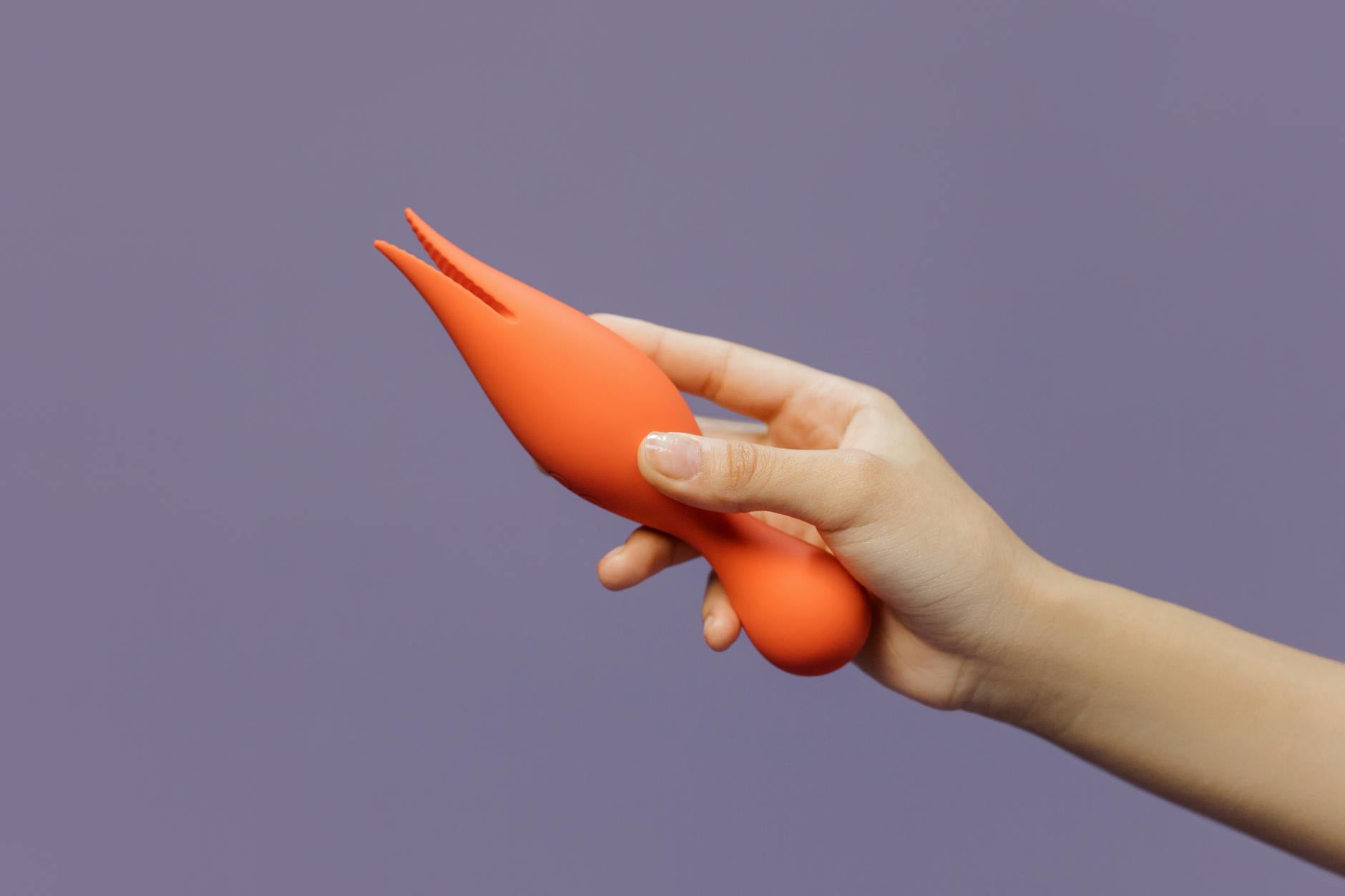
Unlike manual stimulation, which requires your brain to consciously register sensation, a clitoral vibrator like the Lem bypasses some of that cognitive load. The suction and vibration pattern create direct, consistent stimulation that your nervous system can't ignore or dismiss.
There's clinical research showing that women who experience dissociation or numbness respond well to vibration because it provides constant sensory input. It's not asking your nervous system to slowly build arousal. It's saying: here is sensation, present and real, whether you feel ready or not.
A lemon sucker specifically works well after grief because the suction pattern feels less invasive than a traditional vibrator. It's more indirect, which can feel safer when your body is still in protective mode. And psychologically, there's something about the Lem's compact, uncomplicated design that feels less performative. You're not trying to have a big sexual experience. You're just checking in with your body.
Creating the right emotional container
This matters more than you might think. Using a lemon sexual toy while you're still in acute grief and without context is likely to feel hollow, or worse, guilty ("How can I feel pleasure when...?"). That guilt will send your nervous system right back into lockdown.
Before you use a lemon vibrator after loss, get honest about your readiness. This isn't about whether grief has fully passed. It hasn't. It won't. This is about whether you're willing to gently reconnect with your body as an act of care.
Some people find it helpful to set an intention beforehand. This sounds simple, but it works. Something like: "I'm using this to remember that my body is still alive. That I still get to feel things." You're not trying to transcend grief. You're witnessing yourself inside it.
Also practical: timing matters. Don't use a lemon adult toy when you're exhausted or alone in the house feeling depressed. Choose a moment when you're relatively stable, when you've eaten and slept, and when you won't be interrupted. Your nervous system needs to feel safe.
How to use a lemon vibrator when your body is numb
Start with the lowest setting. On a Lem vibrator, that's pattern 1 or 2. You're not looking for intense sensation yet. You're introducing your nervous system to the idea that pleasure is still possible.
Let yourself use it for just 5-10 minutes the first few times. There's no expectation of orgasm. There's no goal. You're baseline-testing. Does this feel good? Neutral? Uncomfortable? All of those answers are fine.
If nothing happens the first time, don't escalate. Don't add intensity. Don't add stimulation elsewhere. That's your brain trying to force sensation, and it will fail. Instead, use it again the next day at the same low setting. You're building a neural pathway back to pleasure, and that takes repetition, not intensity.
Many people find that after 5-7 days of gentle, low-intensity use, something shifts. A small tingle. A slight increase in sensation. Nothing dramatic. But real.
Moving through stages of reconnection
Once baseline sensation returns, usually around the 1-2 week mark, you can begin to explore slightly higher settings. Move from pattern 2 to pattern 3. Again, not because pattern 3 is better, but because you're gradually reintroducing your body to variation.
At this stage, many people find it helpful to create a small ritual. Light a candle. Take a warm shower first. Put your phone somewhere you can't see it. You're building an environment that signals to your nervous system: it's safe to feel here.
Pleasure after grief often feels different than it did before. It might be less intense. It might come in shorter bursts. It might feel bittersweet. All of that is normal. You're not trying to replicate pleasure from before. You're creating a new relationship with sensation that includes the fact that you've survived something hard.
When to involve a partner
If you have a partner, sharing this process is optional, not mandatory. Some people find partner involvement deeply healing. Others need solo space first. There's no right answer.
If you do share it with your partner, the conversation that matters isn't about sex. It's about grief and reconnection. "I'm using this tool to feel my body again. It's not about performance. It's about remembering that I'm still alive." That honesty does more for intimacy than any sexual act.
Partners who understand this, who can witness you gently coming back into sensation without making it about them, can be a powerful part of healing. But they have to understand the permission first. Because if your partner turns this into a sexual expectation, your nervous system will lock back down.
The role of patience (yes, it's that important)
Honestly, this is the hardest part. Grieving people are usually exhausted and impatient with themselves. You might find yourself expecting to feel pleasure on day 3, then disappointed when it doesn't arrive. That disappointment has a name. It's called setback thinking, and it's incredibly common in grief.
Reality: some days your lemon vibrator will feel wonderful. Some days it'll feel like nothing. You might have a week where sensation feels solid, then grief hits again and numbness returns. This doesn't mean you've failed or lost progress. It means you're grieving, and your nervous system is still integrating loss.
The goal isn't to get back to how pleasure felt before. The goal is to prove to your nervous system that feeling is safe again. Some days that proof takes 20 minutes. Some days it takes three sessions. Both are correct.
When to seek additional support
If 4-6 weeks of gentle practice produces no shift in sensation, and if grief is still deeply acute, a therapist trained in somatic therapy or trauma-informed care can help. Grief sometimes gets stuck in the body, and sensation can remain blocked without additional support.
Also reach out if using a lemon vibrator, or any touch on your genitals, triggers acute distress, flashbacks, or panic. That's not a sign that this approach doesn't work. It's a sign that professional support will help you resource your nervous system first.
You deserve to feel pleasure again. Not because you've earned it by grieving well. Not because you've moved on. But because your body is alive, and alive bodies get to feel joy, even in the middle of loss.
People also ask
Can you use a lemon vibrator right after a death or major loss?
Physically, yes. Emotionally and neurologically, usually not yet. Most people need 2-4 weeks to move out of acute shock before gentle reconnection practices feel safe. If you're still in that fog stage, give yourself permission to wait. There's no rush. When you use a clitoral vibrator after grief, you want your nervous system to be stable enough to receive sensation without it triggering dissociation or numbness.
Why does a lemon sucker feel safer than other vibrators after grief?
The suction pattern on toys like the Lem is indirect, meaning it doesn't require the same kind of direct pressure as a traditional vibrator. That indirectness can feel less invasive when your body is still in protective mode. Additionally, the simplicity of the design mirrors simplicity in approach. You're not trying to have an elaborate experience. You're just checking in. That honesty can help your nervous system relax.
What if you don't feel anything even with a lemon sexual toy?
First, check the basics. Are you rested? Have you eaten? Is your nervous system relatively calm? If those are solid and sensation still isn't appearing, give it time. Neural pathways take 5-10 days of repetition to reactivate. Some people feel nothing for two weeks, then suddenly feel something on day 15. That's not weird. That's neurobiology.
Can grief numbness affect the clitoris permanently?
No. The clitoris has about 8,000 nerve endings. They don't disappear because of grief or trauma. They might be less responsive temporarily, but responsiveness returns as your nervous system stabilizes. The only time clitoral numbness becomes permanent is with severe nerve damage, which is rare and usually from injury, not emotion.
Should you force yourself to use a lemon vibrator if it doesn't feel good?
No. If after 10-14 days of practice a lemon clitoral vibrator still feels uncomfortable or unpleasant, pause. Your body might be telling you it needs a different kind of reconnection first. Some people reconnect through movement, or breathwork, or partner touch, before they're ready for solo sensation. Listen to that signal.
Is it normal to feel guilty about pleasure after loss?
Completely normal. That guilt is sometimes called "survivor's guilt," even in non-death grief scenarios. You're feeling pleasure while someone else isn't around to feel it. Your nervous system might interpret that as disloyal. It's not. Pleasure is not a finite resource. Your joy doesn't diminish anyone else's loss. You can honor that loss and still feel good. Both are real.
Reconnection is not the same as moving on
Using a lemon vibrator after grief isn't about "getting back to normal." You won't. Normal is gone. What you're doing is rebuilding the signal between your nervous system and your body. You're saying: I'm still here. I'm still alive. And that aliveness includes sensation and pleasure.
Some of the most profound moments of healing happen not when we transcend grief, but when we learn to live inside it. Your body reconnecting to pleasure while you're grieving isn't contradictory. It's honest. It's you, alive, feeling multiple things at once. That's exactly what you're supposed to be doing.
If you're navigating this after a specific type of loss or relationship transition, I've written about how to use a lemon vibrator when newly single after a long-term relationship and how to use a lemon vibrator when recovering from sexual trauma, which address some overlapping nervous system challenges. And if grief has created broader numbness, how to rebuild clitoral sensitivity after long-term numbness walks through the same gentle, staged approach.
Your body is waiting for you to come home to it. A lemon clitoral vibrator is just one way to begin that conversation. But it works.