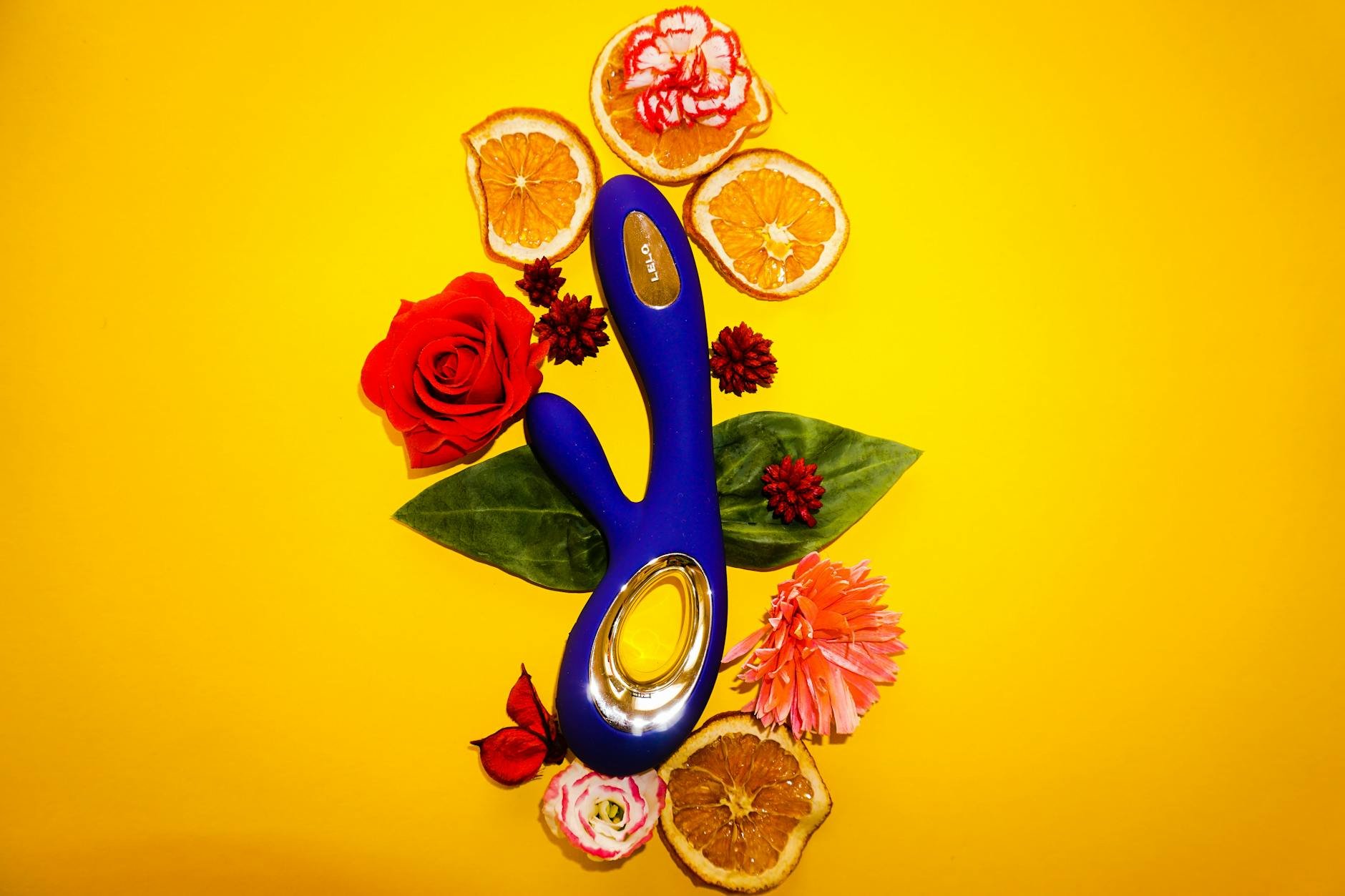
Here's the honest part about sensate focus
Sensate focus therapy works. It's evidence-based, clinically sound, and helps couples rebuild touch and connection after sex has become fraught or painful. But it also feels weird. Really weird. You're lying there with your partner, following a script, touching skin with clinical precision while a therapist's voice echoes in your head telling you not to have sex, not to orgasm, not to feel anything except sensation. It can feel less like reconnection and more like homework.
That's exactly where a lemon vibrator changes the equation. Not by replacing sensate focus, but by giving you permission to let sensation lead instead of follow the rules.
Why sensate focus feels so awkward
Sensate focus was designed by Masters and Johnson in the 1970s as a remedy for performance anxiety. The logic is sound: strip away expectation, remove the goal of orgasm, and just feel your partner's skin. Touch becomes innocent again.
But here's what happens in practice. Your brain is still anxious. You're hyperaware that you're "supposed" to be relaxed. You're monitoring whether you're feeling it right. Is this pleasure? Am I supposed to feel more? Should I be turned on by now? The very thing the exercise is meant to cure is exactly what you're doing the entire time.
When you add a lemon vibrator to the mix, something shifts. Sensation becomes so vivid that your anxious brain has to step back. You can't perform your way through a vibrator. You can't fake what your body is feeling. The clitoral vibrator does the work of pulling you into the present moment, and your partner's hands become secondary pleasure, not the main event you're both nervously waiting to feel.
What happens when you introduce a lemon clitoral vibrator into sensate focus
First, you're removing the pressure. If sensate focus is about touch feeling good, a lemon vibrator is about sensation being unavoidable. The lem vibrator uses suction and pulse patterns that activate the clitoral nerves in ways that manual touch alone can't match.
Second, you're reframing the interaction. Instead of "Does your touch feel good?", the question becomes "What does pleasure feel like when we're here together?" Your partner's hands can drift across your chest, your thighs, your neck while the lemon vibrator handles the intense sensation work. They're no longer responsible for making you feel something. They're just present.
Third, and this matters most: you're teaching your nervous system that pleasure and connection can happen at the same time. Traditional sensate focus deliberately separates them. You touch, but you don't have sex. You're present, but you're not excited. This works for some couples, but for many, it reinforces the idea that touch and desire are separate worlds.
A lemon adult toy bridges that gap. You can feel intensely aroused and still be fully present with your partner. Your pleasure and their presence aren't competing. They're the same experience.
The three-phase approach
Phase 1: Individual sensate focus with a lemon vibrator (weeks 1-2)
Start alone. This isn't about partner dynamics yet; it's about retraining your own nervous system to find sensation good instead of scary. Spend 15-20 minutes with your lemon sexual toy at a low intensity setting. The goal isn't orgasm. It's noticing what pleasure feels like. What patterns feel best? Where do you like pressure? What speed pulls you into the moment?
Many couples skip this step and jump straight to partnered touch, but that's where awkwardness lives. You need to remember what turned-on feels like in your own body first.
Phase 2: Partner observation (weeks 2-3)
Your partner is present, but not touching. They're watching. This sounds like it could be performative, but it's the opposite. Your partner sees you enjoy yourself without needing to do anything. There's no pressure on them to create sensation. They're simply witnessing your pleasure.
Use your lemon vibrator as you did alone. Let them see you enjoy it. This teaches them that your pleasure is possible, that your body still responds, and that you're not broken. For many couples rebuilding connection after therapy or after tension, this single shift in perspective is transformative.
Phase 3: Partner touch plus clitoral vibrator (weeks 3+)
Now your partner touches while you use your lemon clitoral vibrator. Their hands explore your shoulders, your back, your inner thighs, your breasts. The vibrator handles the intense sensation. Their hands provide comfort and connection. There's no awkward silence where you're both waiting for something to happen. Sensation is already happening. They're invited into it.
This is where sensate focus stops feeling clinical and starts feeling intimate. You're not following a script anymore. You're genuinely sharing pleasure.
How to talk about this with your partner
If sensate focus was prescribed by a therapist, you've likely already had the difficult conversation about what's not working in your physical connection. Adding a lemon vibrator isn't a step backward or a sign of failure. It's a tool that makes the exercise actually work.
Honestly though, frame it as expansion, not substitution. Say something like: "The sensate focus exercises help, but they sometimes feel disconnected. I want to try adding touch back in while using a vibrator. I want to feel pleasure with you, not just feel your hands."
If your partner is nervous about a vibrator, that's normal. Some people worry it means they're not enough. That's not true. A lemon vibrator is the opposite of a substitute. It's something you're doing together that creates space for them to be present without the weight of performance.
When this approach works best
This reframing of sensate focus is especially helpful if you're rebuilding after your partner's erectile dysfunction, after years without sex, or after therapy has helped you identify anxiety or disconnection as the root issue. It's less useful if your friction is actually about desire mismatch or resentment. A clitoral vibrator won't fix a relationship problem. But it can absolutely resurrect a physical connection that's been lost to fear.
If you're working with a therapist, mention the lemon vibrator adjustment. A good clinician will recognize it as a practical evolution of the exercise, not a violation of it. If your therapist pushes back, ask why. Sensate focus's goal is to rebuild sensation and connection. If adding sensation helps you achieve that, it's a success.
The shift from mechanical to real
Here's what I've seen happen repeatedly with couples who start sensate focus with a lemon vibrator instead of without one. After two or three weeks, they stop using it as a crutch and start using it because they want to. That's the inflection point. When a tool moves from "we're supposed to use this" to "this feels good," you've rebuilt something real.
Then, gradually, partners stop needing the vibrator as intensely. They become curious about combining it differently. They might use it at the start of a session and abandon it partway through because touch has become so present again. The lemon vibrator wasn't the goal. It was the bridge.
Sensate focus is supposed to return you to a place where your partner's touch feels like pleasure. A lemon clitoral vibrator doesn't replace that journey. It just makes it possible to actually enjoy the ride.
People Also Ask
Is using a vibrator cheating on the sensate focus exercise?
No. Sensate focus's purpose is to rebuild sensation and reduce anxiety around touch. If a lemon vibrator helps you achieve that, it's not cheating—it's adapting the tool to fit your actual nervous system. Masters and Johnson developed sensate focus in the 1970s without vibrators widely available. That doesn't make vibrators incompatible with the goals. Talk to your therapist if you're uncertain, but adding sensation to an exercise that's meant to rebuild sensation is logically sound.
Can my partner feel intimidated by a lemon vibrator during this process?
Possibly. That's why communication is critical. Many partners worry a vibrator means their touch isn't enough. That's understandable but usually not true. A vibrator can handle intense sensation work while your partner provides the intimacy and presence that manual touch can't. You're working together, not competing. If your partner is nervous, start with them observing while you use a lem vibrator alone. Let them see that your pleasure is real and possible. Often, that one shift dissolves the intimidation.
How long until sensate focus starts feeling less awkward?
Most couples notice a shift around two to three weeks of consistent practice. The mechanical feeling usually eases around week three or four once you've moved into partner-involved touch. If it's still robotic after four weeks, check in with your therapist or your partner about what's missing. Sometimes the issue is trust, not technique.
What setting should I use on my lemon vibrator during sensate focus?
Start low. Patterns 1-3 on a clitoral vibrator are usually best for sensate focus because they're subtle enough that you can still feel your partner's hands and the surrounding sensation. As you get comfortable, you can experiment with faster patterns. The goal early on is sensation, not intensity. You want to feel present, not numbed out by vibration.
Can I combine sensate focus with a lemon vibrator if we're trying to conceive?
Absolutely. Sensate focus with a lemon clitoral vibrator is about rebuilding touch and connection. If you're trying to conceive, you'd typically return to penetrative sex during your fertile window, but the sensate focus practice—with or without a vibrator—remains valuable for maintaining intimacy and reducing performance pressure. Check with your doctor if you have specific fertility concerns, but most clinicians see no conflict.
What if my partner wants to use the lemon vibrator on me?
That's a beautiful evolution. Once you're both comfortable, your partner can absolutely hold a lem vibrator against you while they touch you elsewhere. This blends the intensity of vibration with the intimacy of their hands and presence. It often feels less mechanical than you using it yourself because you're fully focused on receiving rather than performing.
The bottom line
Sensate focus works. It also feels stiff and prescribed. Adding a lemon vibrator to the practice gives your nervous system permission to actually feel pleasure instead of anxiously monitoring whether you're doing the exercise right. That's not a workaround. That's the exercise working the way it was always meant to. If you're in the early weeks of rebuilding physical connection and sensate focus feels clinical, try this reframe. You might find that pleasure plus presence is exactly what you've been missing.