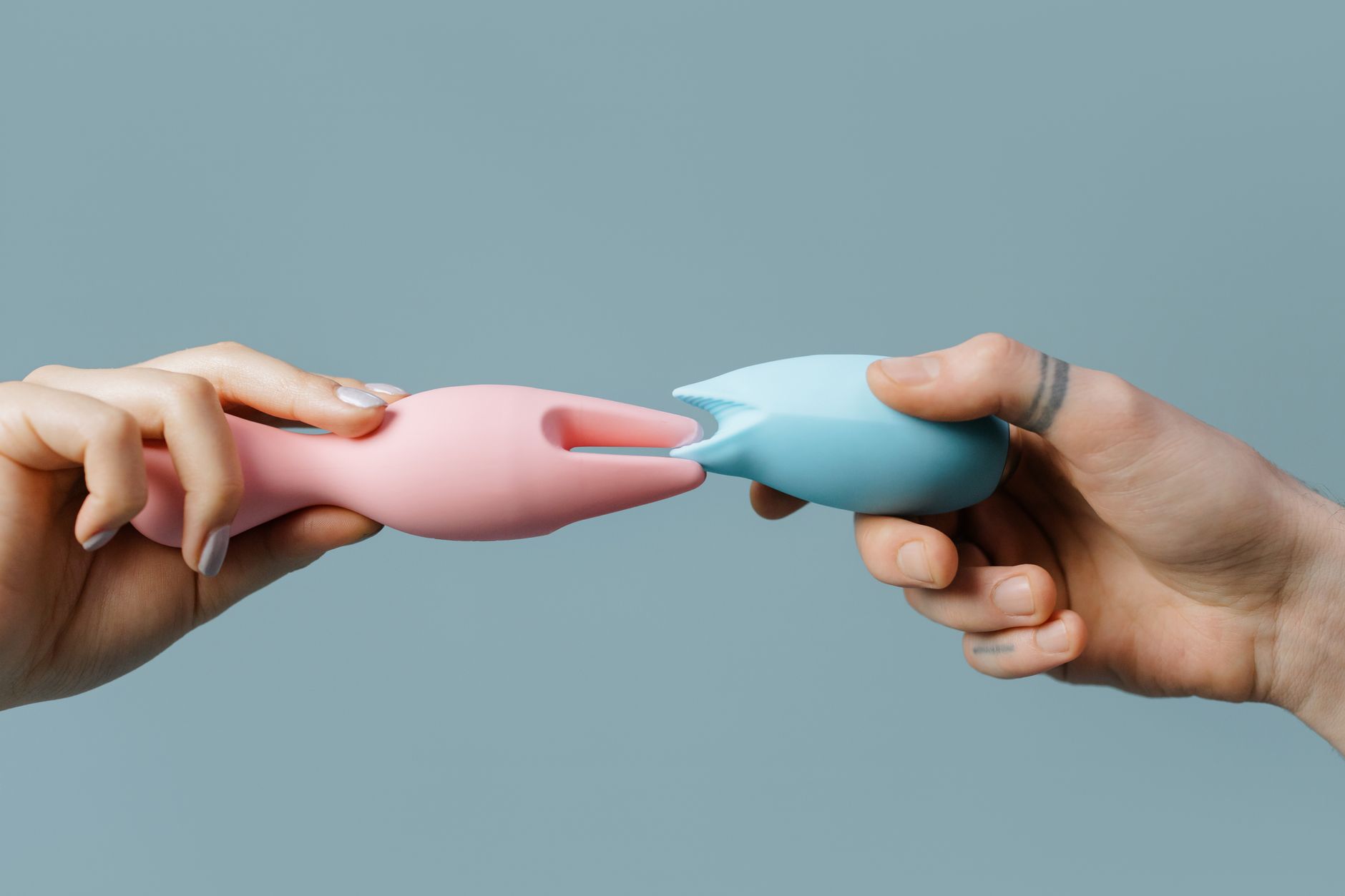
Let's be real about desire mismatch
Your partner wants sex three times a week. You're thinking about it maybe once. Or you want it, but only when they're not actively asking. The pressure builds. So does the resentment. One of you starts performing, and neither of you feels good afterward.
This is the most common friction point in long-term relationships, and it's not a character flaw. It's a signal that you've lost track of your own desire, separate from managing theirs.
Why desire disappears when someone else is always reaching for you
There's a paradox in responsive desire. Most people with vulvas experience desire that builds during arousal rather than preceding it. But that only works if you feel safe enough to say yes to touch. When your partner initiates constantly, the nervous system gets stuck in a defensive loop: anticipating the ask, bracing against it, then feeling guilty for the resistance.
Your brain actually starts suppressing arousal as a form of protection. You're not broken. You're boundaried. Your body is trying to protect your autonomy.
The other thing that happens is sneakier. You stop touching yourself. Not consciously—it just happens. If your partner is always available and always reaching, self-pleasure can feel redundant or like you're taking something from the relationship. But that's backwards. Solo pleasure is foundational. It's the baseline.
Without it, partnered sex becomes about managing their desire, not exploring yours. Which means your pleasure, when it arrives, feels incidental rather than central.
How self-pleasure with a lemon vibrator changes the dynamic
Using a clitoral vibrator alone does three things that matter.
First, it separates your pleasure from performance. When you're alone with a tool like the Lem vibrator, there's no one to perform for. No rhythm to match, no anxiety about timing. You can explore what actually feels good instead of what you think should feel good. This is where desire starts to rebuild.
Second, it recalibrates your nervous system. Your body learns that pleasure is something you can initiate and control. Arousal becomes something you own, not something that happens to you when someone else decides. That autonomy is huge. It's the thing that actually allows you to say yes more genuinely to your partner later.
Third, it gives you data. Solo sessions reveal patterns—which intensities work, which settings build arousal fastest, whether you need mental space or specific conditions. When you understand your own pleasure map, you can communicate it to a partner. "I need 20 minutes of lower intensity before I'm ready" is way more useful than "I don't know, I'm just not in the mood."
The practical rhythm that works
Here's what I recommend to couples where one partner carries the initiation load.
Schedule solo time with the lemon vibrator at least twice a week. Not because it's a chore. Because it's the research phase. Treat it like you're learning a new skill, because you are.
Start without a specific goal of orgasm. Just explore sensation. Some days the Lem might spend 10 minutes on the lower patterns—patterns 1 through 3—and that's the whole session. Other days you'll go deeper. The point is removing the pressure to finish.
Pay attention to what temperature you're in when arousal builds. Are you relaxed? Focused? Distracted? Alone in the house versus half-listening for interruptions? Your body has conditions, and nobody needs to know them but you.
After a few weeks of this, the shift is obvious. You'll notice genuine arousal returning—the kind that happens without someone else asking for it. That's not coincidence. It's your nervous system stabilizing.
How to handle the conversation with your partner
Don't lead with "I need more space from your initiations." That reads as rejection. Instead, frame it around your own journey. "I realized I've stopped exploring pleasure by myself, and that's making it harder for me to feel desire with you. I'm going to dedicate some time to figuring out what actually works for my body."
Most partners who are carrying the initiation load are actually relieved. It means the pressure is off them too. They get to stop reading every touch as a green light. They get to wonder, again, whether you'll be interested.
That uncertainty is actually the thing that rebuilds attraction in long-term relationships. Predictability kills it. Autonomy brings it back.
What happens when you bring it back to your partner
Once you've spent time understanding your own pleasure with the Lem, things shift in partnered sex. You might ask your partner to use the clitoral vibrator on you. You might describe what you learned in solo sessions. You might say yes to sex sometimes and no other times, without it feeling like you're disappointing them because you're not operating from a deficit.
You might also discover that you want sex more often, because you're not exhausted by the effort of managing their desire. Your yes feels like a yes again instead of a negotiation.
The couples who move through desire mismatch successfully aren't the ones who sync up their libidos. That rarely happens. They're the couples who separate the conversation. Your pleasure is yours. Their pleasure is theirs. When you both own your side, the times you overlap actually mean something.
The framework for initiating together again
Once you're regularly using the lemon vibrator solo and feeling the shift, you can reintroduce partnered sex with new rules.
Take turns initiating. If your partner initiated last time, you go next. Even if you're not sure you want it. Often, once touch starts, responsive desire kicks in. The invitation to explore together becomes different when it's not always the same person asking.
Use the Lem together sometimes. Some partners get interested in watching. Others like to be involved in the experience. There's no rule. But having a tool that you've learned to use for yourself means you can actually direct your own pleasure in real time. You're not just receiving.
Build in genuine rest days. If you had sex Tuesday and Thursday, plan no sexual contact for at least a few days after. Rest feels luxurious when you know it's coming. It also kills the dread that comes from anticipating constant initiation.
When this doesn't work—and what it means
If you've spent a month using the Lem solo, communicating clearly, and you're still feeling aversion to your partner's touch, that's different information. That's worth exploring with a therapist, because it might mean something else is broken in the relationship. Desire mismatch is fixable. Incompatibility or resentment is trickier.
But most couples I've worked with find that reclaiming solo pleasure is the pivot point. It sounds counterintuitive. You'd think more partnered sex would fix it. Usually it's the opposite. Permission to opt out, to slow down, to explore alone first—that's what lets people genuinely opt in later.
FAQ: Desire mismatch and pleasure
How often should I use a clitoral vibrator like the Lem if my partner initiates way more than I do?
Start with twice weekly solo sessions, 15 to 30 minutes each. This is enough to help your nervous system regulate and reconnect with autonomous arousal without becoming another obligation. After a month, you might find you naturally want more. That's the signal that desire is rebuilding.
Will using a lemon vibrator solo make me less interested in partnered sex?
Actually, the opposite. Solo pleasure with a tool like the Lem typically increases desire because it removes the defensive guardedness that builds up when someone else is always initiating. Once you're not bracing against unwanted touch, genuine arousal can return. Many people find they want partnered sex more often, just on their own terms.
How do I talk to my partner about using the Lem without them feeling replaced?
Frame it as research, not rejection. "I realized I've lost touch with my own arousal, and that's making it hard for me to feel desire with you. I'm going to explore what works for my body solo. This isn't about you—it's about me getting myself back." Most partners respond well to this because it shifts the burden off them.
Can we use the Lem together if desire mismatch is the issue?
Yes, but usually not first. Solo exploration helps you learn your own pleasure independent of performance. Once you're comfortable with that, bringing a clitoral vibrator into partnered sex becomes playful rather than pressured. Some couples find that watching their partner use the Lem is actually more arousing than conventional sex.
What if I use the lemon vibrator and I still don't want sex with my partner?
That's worth exploring further. Desire mismatch is usually fixable. But if solo pleasure feels good and partnered sex still feels like dread, there might be deeper relationship issues—resentment, attraction loss, or communication breakdown. That's a conversation for a therapist, not something a vibrator can fix.
How long does it take for desire to return after using a clitoral vibrator solo?
Most people notice shifts within 2 to 4 weeks. Your nervous system starts calming down when it knows the touch isn't constant and mandatory. The libido itself can take longer—sometimes 2 to 3 months—but you'll feel the defensive guardedness lift much faster. That's when genuine desire becomes possible again.