
Let's talk about what actually happens to your body
Antidepressants change sensation. That's not a side effect you hear about in the doctor's office nearly enough. When you start a new medication or adjust your dose, your nervous system responds. Serotonin reuptake inhibitors (SSRIs) in particular can flatten arousal, delay orgasm, or make your genitals feel like they're wrapped in cotton for months. Then one day, or over a few weeks, sensation starts returning. And suddenly you're confused, because you're not sure what your body can actually feel anymore.
This post is for people navigating that transition. Not the adjustment period itself, but the weirdness that comes after. When numbness lifts and you're trying to figure out whether your pleasure is actually back, or if you're imagining it.
Why antidepressants flatten sensation in the first place
SSRIs work by increasing serotonin availability in the brain and throughout the body. The problem: serotonin also plays a role in sexual response. Higher serotonin can inhibit dopamine and norepinephrine, which are the neurotransmitters that fire during arousal and orgasm. It's a side effect of the mechanism that helps your depression, not a personal failure.
Most people experience one of three patterns. Some notice reduced desire. Some feel desire fine but can't quite reach orgasm, or it takes forty minutes instead of ten. Others describe sensation as muted, like touching silk instead of skin. These aren't permanent, though they can feel endless while you're in them.
When you adjust your dose or switch medications, that balance shifts again. Your brain is learning a new neurochemical equilibrium. That's when sensation sometimes returns, sometimes changes shape, sometimes stays weird but in a different way.
The first thing to know about rebuilding pleasure
Your body is not broken. It's recalibrating. That distinction matters because shame is often the second side effect of medication adjustment, and it's the one nobody warns you about. You might feel like your pleasure is a moving target, that you're failing at sex, that your partner is disappointed. None of those stories are true, even though they feel true.
Rebulding sensation after antidepressant changes is slower than you'd like. Budget six to twelve weeks minimum before you know what your new baseline actually is. Your nervous system needs time to map the new neurochemical landscape. Patience here isn't weak. It's the thing that actually works.
How air-suction lemon vibrators help with medication-related sensation changes
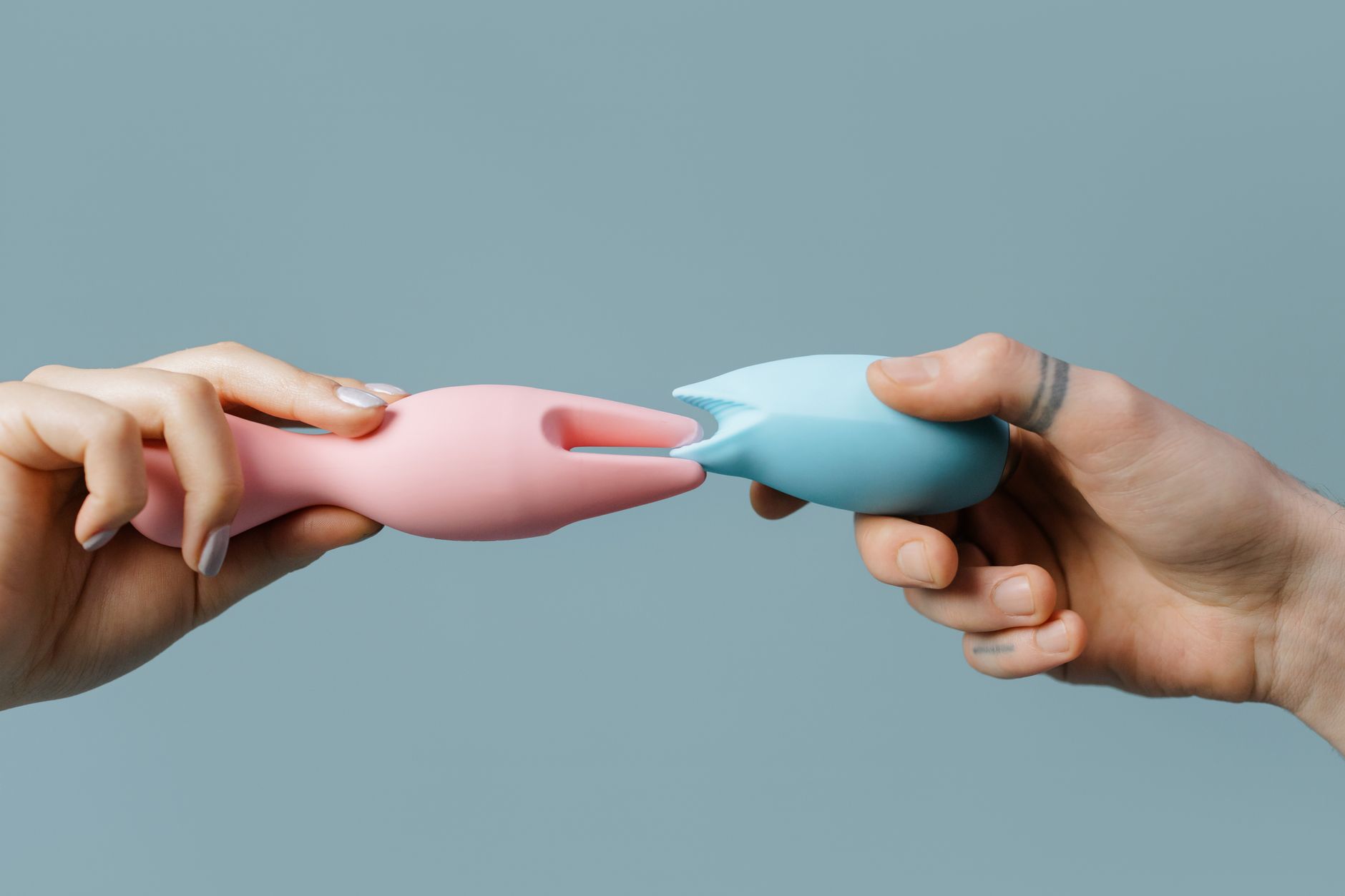
Here's the thing about clitoral vibrators like the Lemon Clitoral Vibrator: they work differently than traditional vibration. Air-suction technology creates a gentle vacuum and release pattern that stimulates nerves through pressure change rather than direct friction. When sensation feels muted, that gentler approach often reaches your nervous system more clearly than high-frequency buzzing would.
For people coming off numbness, there's another advantage. Suction tools let you start with lower intensity and build gradually. If you're unsure whether you can feel sensation at all, starting at pattern one and slowly moving up gives you real feedback about what's awakening. That feedback is important. It tells your nervous system "okay, we're rebuilding," which actually helps the rebuilding happen faster.
Starting over with sensation: the practical steps
Three principles matter more than technique here.
First, create time without pressure. If your partner is in the picture, tell them what's happening. "My medication changed my sensation, and now it's coming back. This is going to feel exploratory and weird for a bit." That conversation often relieves more pressure than you'd expect. Partners usually don't want you faking. They want to know what's real.
Second, start with just touching. Before you use any toy, spend a week or two hand-exploring. Where do you feel sensation most clearly? Is it the same as before, or different? Your clitoris might feel strongest. Or maybe the labia. Or the vestibule. Map it out. Write it down if you want. This information is yours to use.
Third, use your lemon vibrator as a research tool, not a performance tool. The goal is not to come. The goal is to notice. Start with the suction tool at the lowest setting and hold it against your clitoris for five seconds. Remove it. What did you feel? Numbness? A faint tingle? Sharp sensation? All of the above in different spots? Document it. Try again tomorrow. Sensation changes daily early on.
When sensation is patchy or returns slowly
You might find that pleasure comes back unevenly. One day your clitoris feels alive. The next day it's muted again. This is normal when your nervous system is recalibrating. Don't interpret variation as failure. Neurologically, it's information.
If sensation returns in some areas first, follow that. If your labia feel responsive but your clitoris doesn't yet, spend time there. If the left side wakes up before the right, that's worth noticing. Your body is coming back online in its own sequence. Honor that sequence instead of forcing the one you remember.
When sensation feels like it's arriving but you're not sure, try this: use your lemon vibrator, then switch to your hand. What's the difference in how you feel? If there's no difference, sensation probably hasn't returned yet, and that's fine. If there's even a small difference, sensation is coming back. Give it more time.
The emotional part (which is actually harder than the physical part)
Antidepressant side effects arrive with shame packaged inside. You might feel angry at your medication for "taking" your sexuality. You might feel defective. You might worry that your partner will leave. You might grieve the way your body used to respond. All of these feelings are real and valid and they're also separate from what's actually happening in your nervous system.
What I see with clients navigating this is that the emotional processing actually matters for the physical recovery. When you can separate "my medication is managing my mental health well" from "my body feels numb right now," both things can be true without one canceling the other. Your depression matters. Your pleasure also matters. You can advocate for both.
If you're in a relationship, this is a moment to practice radical honesty. "I don't know what my body can feel right now" is a complete sentence. "I want to rebuild this but I need your patience" is another one. Partners who can sit with that uncertainty are partners worth keeping.
When to check in with your prescriber
If sensation hasn't returned after three months, or if it's returning but it feels painful or strange, call your doctor. Some SSRI side effects improve with time. Some improve with dose adjustment. Some improve with switching to a different class of antidepressant. Your prescriber needs to know what's happening so they can help.
There's also the option of adding a medication that counteracts sexual side effects (like bupropion or buspirone), though that's a conversation worth having once you've given yourself at least six weeks to see what your body does on its own.
The key: you're not stuck. Your body is not broken. You're in a transition, and transitions take time.
FAQ: Antidepressant Changes and Sensation
How long does it usually take for sensation to return after an antidepressant adjustment?
Most people notice changes within two to twelve weeks, but that timeline is wildly individual. Some nervous systems recalibrate in a month. Others take four months. Sleep, stress, relationship dynamics, and the specific medication all play a role. If you're at six months and nothing has shifted, that's when to loop your prescriber back in.
Can I use a lemon vibrator if I'm completely numb right now?
Yes, but reframe the goal. You're not trying to orgasm. You're gathering data. Using a suction tool like a lemon clitoral vibrator at low intensity tells you whether any sensation is present and where. That information helps your nervous system understand what's happening. It's part of the recalibration process.
Is it normal for sensation to come back in one area first?
Completely normal. Your nervous system doesn't wake up all at once. Some people feel their labia first, then their clitoris. Others feel the left side before the right. This asymmetry actually tells clinicians that the sensation is real—brains don't usually produce fake sensations in weird patterns. Follow whatever awakens first.
What if my partner is frustrated while I'm rebuilding sensation?
That's a conversation that needs to happen outside the bedroom. "I'm in a transition right now and I need patience" is reasonable. If your partner can't offer that patience, that's information about your relationship that's worth examining. Partners who care about you want to support you through this, even if it's inconvenient.
Can I combine my lemon vibrator with other tools during antidepressant adjustment?
Yes. Some people find that mixing suction stimulation with hand touch, or using their toy and a partner's touch simultaneously, helps wake sensation faster. There's no single right way. Experiment and pay attention to what gives you the clearest feedback about what you can feel.
What if sensation returns but it feels different from how it felt before my medication?
It probably will. Your nervous system has literally reorganized. The pleasure you feel now might be sharper, or softer, or more concentrated, or spread differently. That doesn't mean something's wrong. It means your body has a new baseline. Spend time getting to know it before deciding whether you like it.
What comes next
Rebulding pleasure after antidepressant changes is one of those transitions that feels like it will last forever while you're in it and then, suddenly, you're on the other side and your body feels normal again. Not the same as before, necessarily. Just normal in a way you can work with.
Use your lemon vibrator as a tool for understanding, not as a performance standard. Give your nervous system the time it actually needs, not the time you think it should need. Talk to your partner if you have one. And remember that managing your mental health is more important than managing your pleasure right now. The pleasure will come back. Give it space to do that.
If you're unsure about your next steps, we're here. Reach out to us with your specific situation and we can point you toward resources that match where you actually are in the process.