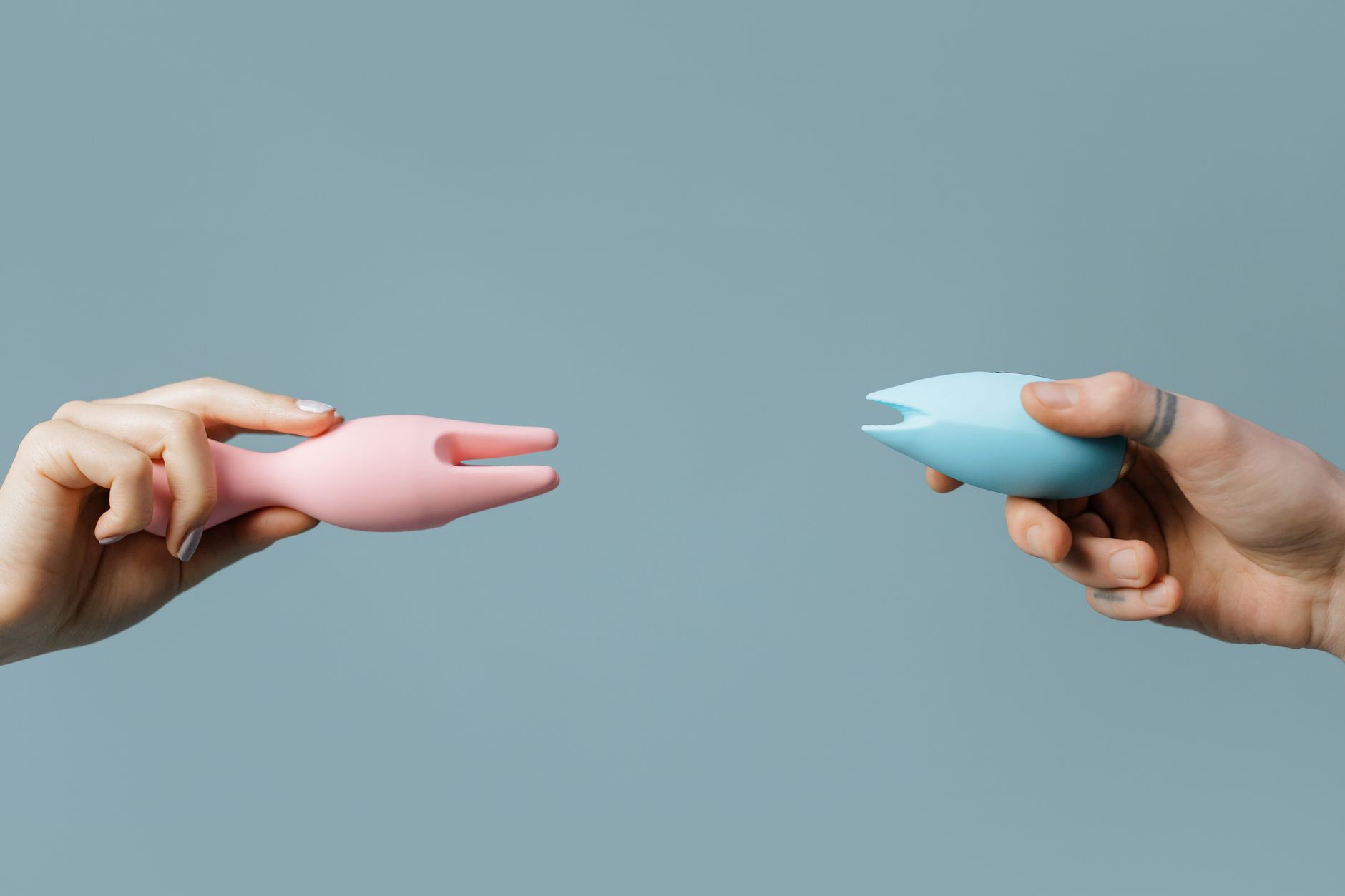
How to Use a Lemon Vibrator When Arousal Takes Longer After Stress or Life Changes
Let's be real. When you're in the middle of a job transition, grieving, dealing with family chaos, or just completely burned out, your body doesn't exactly prioritize sexual arousal. Your nervous system is running in survival mode. Your brain is occupied. And getting turned on takes what feels like forever.
Then there's the shame spiral: you feel broken because you used to get excited faster. Your partner might feel rejected because initiation looks different now. And you start avoiding sex entirely because you're tired of feeling like something is wrong with you.
Here's what's actually happening. Arousal isn't just about desire. It's a nervous system response that requires safety, presence, and enough bandwidth to notice sensation. When you're stressed, your body has legitimately less capacity for all three. That's not a malfunction. That's your nervous system doing exactly what it's designed to do.
The good news: you can rebuild this. And lemon clitoral vibrators are surprisingly effective for people navigating this exact transition.
Why stress and life changes slow arousal down
Your nervous system sits on a spectrum between sympathetic (fight-or-flight) and parasympathetic (rest-and-digest). Arousal lives in parasympathetic territory. It needs you calm enough to feel sensation, present enough to stay with it, and resourced enough to enjoy it.
When you're managing a major life change, your sympathetic nervous system takes the wheel. Whether it's a career shift, moving, caring for an aging parent, or recovering from loss, sustained stress burns cortisol, reduces dopamine, and literally dampens blood flow to your genitals. Your body isn't refusing pleasure. It's protecting you by prioritizing survival over sensation.
The timeline matters too. You can't think your way out of this. You can't shame yourself into faster arousal. You need your nervous system to downshift first.
How lemon vibrators help when arousal is slow
A lemon clitoral vibrator like the Lem works differently than traditional vibrators. Instead of direct friction, it uses gentle air-suction stimulation that creates a sensation between pressure and softness. For people with slowed arousal, this matters because.
First, air-suction requires less direct touch to register sensation. Your body can pick up the signal even when you're not fully relaxed yet. This is useful when you're on the edge of parasympathetic but not fully settled.
Second, the lemon vibrator's intensity patterns can be built gradually. You start at the lowest setting, which feels almost tentative, almost like your body is being asked a question rather than demanded upon. For people retraining their nervous system after stress, that distinction is huge.
Third, the sensation itself is novel enough to interrupt the thought loop. When you're stressed, your brain is usually somewhere else: replaying a difficult conversation, planning tomorrow, worrying. A new kind of touch can snap attention back into your body without requiring you to force focus.
Rebuild arousal in three phases
Phase 1: Settle your nervous system first (5-10 minutes).
Don't skip this. Your arousal isn't slow because you're broken. It's slow because your nervous system is activated. Before you touch your genitals, help your body downshift.
Take a hot shower or bath if time allows. Do 5 minutes of slow breathing (in for 4, hold for 4, out for 6). Put on music that actually calms you, not background noise you tolerate. Light a candle. The goal here is not sexy-time setup. The goal is parasympathetic activation. You'll know it's working when you stop thinking about your to-do list.
Phase 2: External touch before direct stimulation (5-10 minutes).
Start the lemon vibrator on the lowest setting and use it on your inner thighs, lower belly, or the area around your vulva but not directly on your clitoris yet. This primes the nervous system for genital touch without triggering the pressure-response that stressed bodies sometimes have.
Most people with slowed arousal report that this peripheral phase is where the shift happens. By the time you move to direct clitoral stimulation, you're already halfway there.
Phase 3: Gradual intensity (10-20 minutes).
When you move the lemon vibrator to your clitoris, stay on the lower patterns (1-3) for at least the first few minutes. Let your body respond at its own pace. If arousal is building, you can increase. If you feel frustration creeping in, dial back. The goal is sensation, not performance.
Many people in high-stress seasons report that they orgasm, but it feels distant or muted. That's common and temporary. Over time, as your nervous system restabilizes, the intensity of sensation typically returns. You're not chasing a big finish right now. You're chasing the feeling of being present in your own body.
Make it a ritual, not a task
When arousal is slow, the worst thing you can do is treat it like a problem to solve. If you're putting pressure on yourself to "finally" get excited, you're keeping your nervous system activated and making arousal even slower.
Instead, reframe it as a reconnection ritual. This is time you're claiming back for your own body, on your own timeline. Some nights you'll orgasm. Some nights you'll just feel a shift in your breathing, or notice you're thinking about something other than stress for the first time all day. Both count.
If you have a partner, talk about this beforehand. "I'm navigating some slower arousal right now, and I want to rebuild this for myself. I might do this solo for a bit, or I might want you present but not doing anything. Either way, it's not about you." Most partners feel relief at explicit permission to not perform.
Timeline expectations
Stress-related arousal slowdown isn't permanent. But it doesn't snap back overnight either. Most people report noticeable shifts within 2-3 weeks of consistent practice, once the external stressor starts to ease.
If you've been under sustained stress for months, give yourself 4-6 weeks of rebuilding. Your body isn't lazy. It's just been protecting itself. As your nervous system restabilizes and you start reclaiming time for sensation, arousal naturally gets faster again.
One more thing: if arousal remains absent or painful after the external stressor has truly resolved, check in with a therapist or counselor. Sometimes what looks like stress-related arousal slowdown is actually depression, unprocessed grief, or relationship tension that needs its own attention.
When to use a lemon vibrator versus other approaches
Lemon clitoral vibrators are particularly useful for people rebuilding arousal because the air-suction sensation doesn't require the same intensity of tissue sensitivity that friction-based toys demand. If your body feels numb or oversensitive depending on the day, the lemon vibrator's gentle pressure can feel more forgiving.
They're also useful for people who want to introduce toys during stress recovery without the intimidation factor of larger or more intense devices. The Lem's size, simplicity, and discreet design mean less overthinking and more ease.
For people restarting sex with a partner after a stress period, a lemon vibrator can be a bridge. It's something you can use solo to rebuild your own responsiveness, then introduce into partnered sex once you trust your body's response again. That sequential approach often feels less pressure-laden than trying to rebuild arousal together.
Common worries, addressed
"Will using a vibrator make it harder to orgasm with my partner?" No. If anything, rebuilding arousal capacity solo often makes partnered sex easier. You're not waiting for your partner to bring you to the finish line. You know your own response and can communicate it clearly.
"Is it bad that I need more time now?" Not even slightly. Arousal speed isn't a measure of how much you want your partner or how healthy your sexuality is. It's just a nervous system state. Slower arousal can actually deepen presence and sensation if you're not fighting it.
"Should I tell my partner I'm using a lemon vibrator?" That depends on your relationship. If you share a bed and they might notice, transparency is simpler than explanation. If you have privacy, the choice is yours. Either way, using a toy is normal and healthy. You're rebuilding your own pleasure.
FAQ
How long does it typically take for arousal to speed up again after stress? Most people notice shifts within 2-3 weeks once the external stressor begins to ease. Full restoration usually takes 4-8 weeks depending on the intensity and length of the stress period. Your nervous system downshifts gradually, not all at once.
Can I use a lemon vibrator if I feel numb or disconnected from sensation? Yes. Numbness is a common stress response. The air-suction sensation of a lemon clitoral vibrator is gentle enough to register even when sensation feels muted. Start with the lowest intensity and let your body gradually wake up.
Is it normal to not orgasm during this period? Completely. When arousal is slow, orgasm might be too. Some people orgasm but it feels distant. Some don't orgasm but feel more connected to their body than they have in months. All of these are part of the rebuilding process.
Should I use a lemon vibrator solo or with my partner during this time? That's your call. Solo use helps you rebuild your own response without pressure. Partnered use can rebuild intimacy. Many people do both. Starting solo and introducing your partner later often feels less performance-oriented.
What if my partner has different arousal timelines than I do? This is common and worth discussing directly. You might use a lemon vibrator to warm yourself up first, then involve your partner. Or you might take turns. The key is naming it explicitly so no one feels rejected.
If I'm using anxiety medication or antidepressants, will a lemon vibrator help? Some medications dampen arousal neurologically, separate from stress. A lemon vibrator might help you reconnect with sensation, but it won't override medication side effects. Talk to your prescriber about whether dosage or timing adjustments might help, alongside pleasure-building practices.
The bridge back
Arousal slowdown during stress is your body being smart, not weak. Rebuilding it doesn't require willpower or shame. It requires parasympathetic activation, patience, and tools that meet you where you are right now.
If you're navigating major life changes and your sexuality has taken a backseat, you're not broken and you're not alone. Thousands of people move through this every year. With a little intentional time and the right approach, arousal comes back. Often stronger, and always more honest.
Ready to start rebuilding? Set aside 15-20 minutes when you won't be interrupted. Settle your nervous system first. Then introduce sensation slowly. Your body will meet you there.
If you're working through relationship stress alongside individual transitions, a therapist or counselor can help you navigate both at once. Reach out to us if you want to talk through your specific situation.