Here's what nobody tells you about birth control and desire
You started birth control for solid reasons. Regulation, protection, symptom relief. And then something shifted. Not in your mind. In your body. Arousal takes longer to arrive. Orgasms feel muted. The buildup doesn't feel like it used to. You might even wonder if you've somehow broken yourself.
You haven't. Your hormones changed, and arousal is built on hormones. That's not a problem to solve. It's information to work with.
What birth control actually does to arousal
Birth control is ingenious at one job: preventing ovulation by suppressing your natural hormonal peaks. The problem is that those hormonal peaks are what drive sexual desire. Not entirely. But significantly.
Combination pills suppress both estrogen and testosterone production. Progestin-only methods (the mini pill, hormonal IUDs, the implant) work differently but still suppress the testosterone surge that typically triggers spontaneous desire. Copper IUDs don't alter hormones, so desire usually stays the same. Everything else shifts the chemical baseline of wanting.
This affects arousal in three concrete ways:
- Desire becomes more responsive than spontaneous. You might stop thinking about sex randomly. You might only get interested when stimulation is already happening.
- Arousal takes longer to build. That rush of wanting now arrives in the fifth minute instead of the first. It's slower, more gradual.
- Orgasms feel different. Some people experience them as less intense. Others feel them in a different place in the body. Some notice they require more stimulation to reach the same sensation.
None of this is permanent. And none of it means you've lost the capacity for pleasure. It means your nervous system is working with a different chemical environment.
Why the Lem vibrator helps bridge this gap
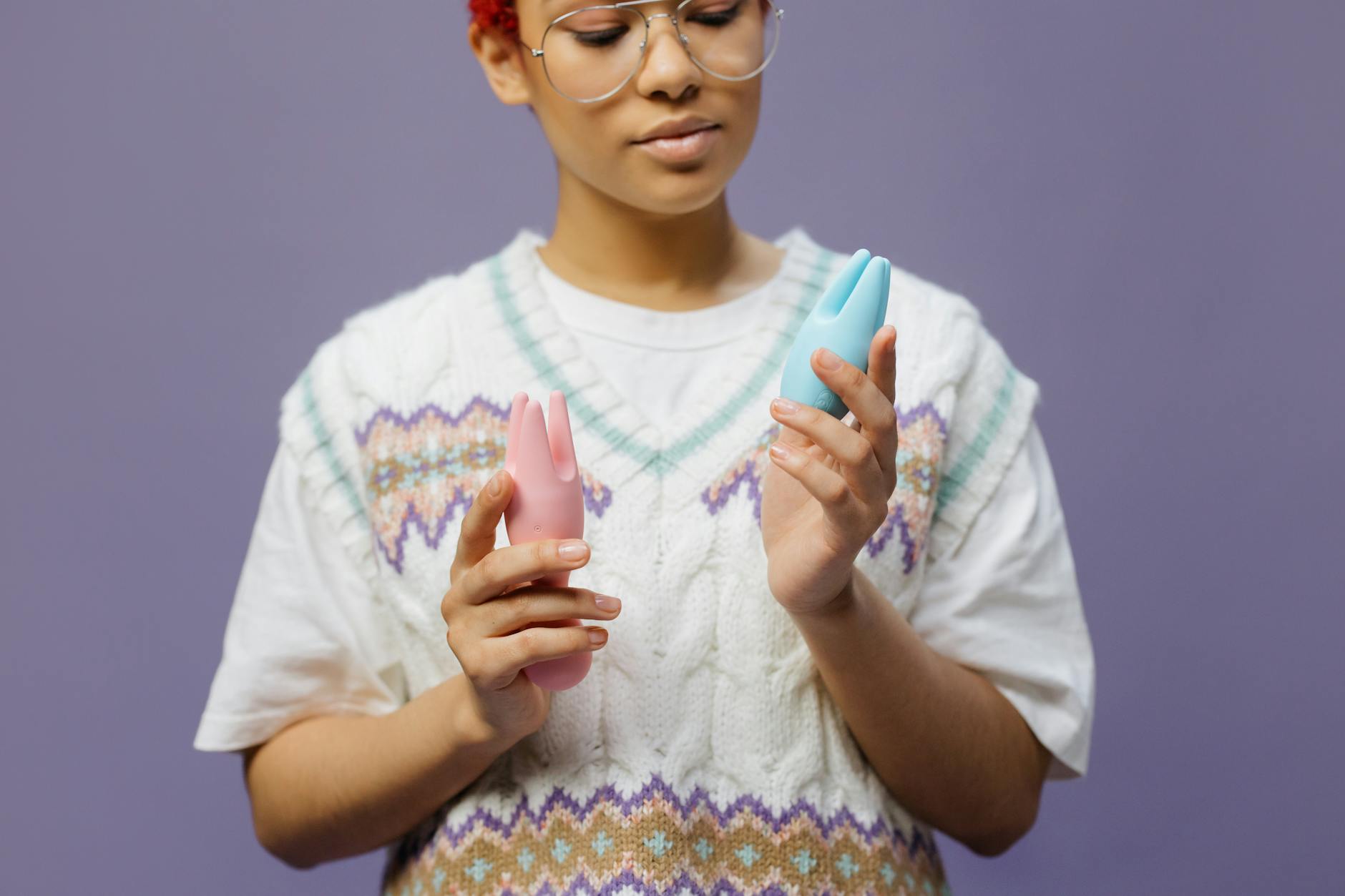
Here's where a lemon vibrator changes the conversation. The air-suction technology of the Lem doesn't rely on the kind of friction or pressure that might feel dampened under lower hormone levels. It uses rhythmic pulses to stimulate thousands of nerve endings at once, which bypasses the "arousal takes forever to build" problem.
Think of it this way. Your arousal system is like a room where the lights were always triggered by a switch (spontaneous desire). Now the switch is less sensitive. But you can still turn on the lights with a remote control (external stimulation). The Lem is that remote control.
It's particularly useful because it works fast and effectively without requiring hours of foreplay. For people whose arousal pattern has shifted to responsive-only, that efficiency matters.
The adjustment period is real
When you start birth control, your body doesn't know it's been chemically altered for a good reason. It just notices that the hormonal feedback loop it's been running for years has shifted. This adjustment usually takes three to six months, sometimes longer.
During this time, your baseline desire might genuinely be lower. Your physical responses might feel muted. This is not psychosomatic. This is not about your relationship or your partner. This is biochemistry.
The crucial thing is not to interpret this as permanent. Too many people start birth control, experience the shift, assume they're broken, and then add anxiety on top of the existing hormonal change. The anxiety then makes arousal even harder. Suddenly you're dealing with a hormonal issue plus a psychological issue that didn't need to exist.
Instead, work with what's actually happening. Accept that your arousal feels different for now. Use tools that work with your new baseline instead of tools that worked with your old one.
What I recommend to clients going through this
First, separate the conversation from your relationship. If you're partnered, your partner needs to understand that this is not about them. You are not less attracted. You are not less interested in connection. Your nervous system is processing a medication. Full stop. This matters because partners often take reduced desire personally, and that shame conversation makes everything worse.
Second, rebuild your solo pleasure practice first. Before you figure out how you and your partner work together, figure out how your body works alone. This is where a lemon clitoral vibrator becomes essential. You're essentially running an experiment on yourself. How long does it take to get aroused now? What kind of stimulation works best? Does orgasm feel different? What buildup time do you actually need?
You can't solve this with your partner in the room. You need the freedom to explore without performance pressure.
Third, choose stimulation that works with longer arousal buildup. Air-pulse vibrators like the Lem work for this specifically because they create sensation without relying on friction. They're strong enough to cut through the numbness some people experience, and they're designed to work on a responsive-desire timeline rather than a spontaneous one.
Fourth, extend your warm-up time intentionally. You might now need fifteen minutes of buildup instead of five. This is not a loss. It's information. Plan for it. Make space for it. Many people find that longer, slower arousal actually leads to more intense orgasms, so you might be trading speed for depth.
When hormonal shifts mean you should talk to a doctor
There's a difference between "my arousal pattern shifted and I'm adjusting" and "my arousal disappeared completely and hasn't come back in eight months."
If after six months on a new birth control method your desire is still flatlined, that might be the wrong method for your body. Different birth control formulations affect desire differently. A lower-dose pill might work better than a higher one. A different progestin might be less suppressive. A copper IUD removes hormones entirely.
This is worth raising with your doctor. Not because there's anything wrong with you, but because you have options, and your sexual health matters as much as your reproductive health.
Similarly, if you're experiencing painful arousal or loss of lubrication (some birth control methods can affect this), that's worth mentioning. There are solutions.
How to actually use the lemon vibrator during this transition
Start with a longer warm-up than you think you need. Spend time with the vibrator at lower intensity settings before you ramp up. Let your body have the time it's now asking for.
Many people find that using the lemon vibrator works best when they're not in a rush. You're not trying to hurry through arousal. You're letting the stimulation do the work of bringing you to readiness. This shift in mindset matters.
If you're partnered, this is also where you might bring them in. Not to fix the problem, but to understand what your new pattern looks like. That transparency often rebuilds desire faster than secrecy.
The truth about birth control and sex
Birth control affects desire for many people. It does not end desire. You're not broken. Your arousal didn't disappear. It changed frequency and timing. Those are solvable problems.
Your body is still capable of intense pleasure. You might just need to approach it differently for a few months while your system adjusts. And you might find that once you've adapted to the shift, sex becomes something you choose consciously rather than something you're driven toward. For some people, that's actually a better experience.
Give yourself permission to figure this out slowly. Your pleasure matters. The time you spend understanding your new arousal pattern is not lost time. It's foundation-building time.
FAQ: Birth Control and Sexual Arousal
Can birth control permanently change your sexual response?
Not usually. For most people, arousal patterns stabilize within three to six months as the body adjusts to the hormonal change. But some people find that even after adjustment, their baseline desire is lower than it was before. This is real and valid. You can work with it through responsive-desire practices, external stimulation like a Lem vibrator, and partnered communication. If it's genuinely unmanageable, talking to your doctor about different birth control methods is reasonable.
Does a lemon vibrator help if arousal feels completely numb?
Often, yes. The suction technology in a lemon sexual toy uses broad-spectrum stimulation that can cut through numbness better than traditional vibration alone. It's worth trying. If it still doesn't help after a few attempts, the numbness might be more about the specific birth control formulation than about stimulation method. That's a conversation for your doctor.
Will my arousal come back if I stop birth control?
For most people, yes. Once the hormonal change is removed, your natural testosterone and estrogen patterns usually resume within a few weeks to a few months. The timeline depends on which birth control you were using. But here's the thing: you don't have to choose between birth control and sexual desire. You can have both. It might just require a different contraceptive method or a period of adjustment with tools that work with your new baseline.
Should I tell my partner about this shift?
Yes. Not because there's something to apologize for, but because the shift will affect both of you, and secrets make everything harder. The conversation might sound like: "My arousal pattern changed when I started this birth control. I need a bit longer to warm up now, and I'm going to explore what works for my body. Here's what I need from you in the meantime." That honesty is the foundation for working through it together.
Is there a way to prevent the arousal shift before starting birth control?
Unfortunately, no. The hormonal shift is how birth control works. What you can do is start with the expectation that change is coming, so it doesn't feel like a surprise or a failure. You can also ask your doctor about lower-dose formulations or different methods that might have less impact on desire. But the shift itself is not preventable.
Can I use a lemon clitoral vibrator while I'm adjusting to birth control?
Completely safe. External vibrators don't interact with birth control at all. In fact, many people find that using a responsive-desire tool like a clitoral vibrator during the adjustment period actually helps them understand their new baseline faster. You're gathering data about what your body needs now, and that information is useful for conversations with your partner and your doctor.
What comes after the adjustment
Most people emerge from the birth control adjustment period with a clearer understanding of how their desire actually works. You might find that you prefer responsive desire over spontaneous. You might discover that orgasms feel different but not worse, just different. You might realize that your partner's touch hits differently when you're not operating on autopilot.
Use these months of transition to become an expert on your own body. By the time your system fully adjusts to the hormonal change, you'll know exactly what works for you. That's not a loss. That's an education that most people never get to have.