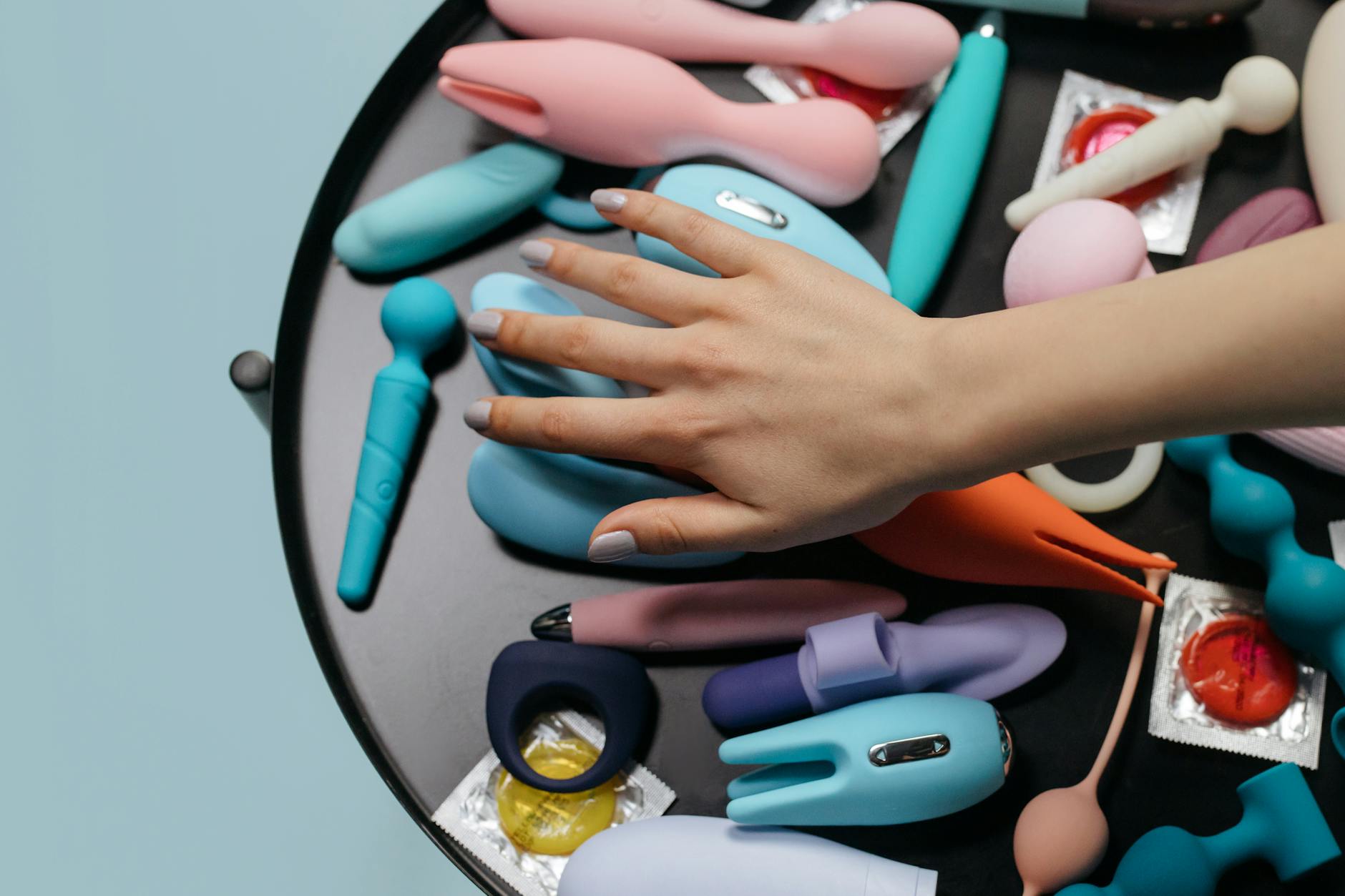
Rebuilding sensation after the partnership ends
Let's be real: when you spend years with someone, your body learns their rhythm. Your arousal patterns sync to their initiation. Your pleasure becomes organized around someone else's schedule, preferences, and presence. Then one day, that person isn't there anymore. You're alone, and suddenly your body feels like it belongs to a stranger.
That disconnection is normal. What's less normal is how few people talk about what happens to solo pleasure after a long-term separation or divorce. The emotional processing gets all the attention. The body reconnection part? Usually just assumed to sort itself out.
It doesn't.
Why sensation actually gets harder when you're alone
Three years together, five years, fifteen years. The length doesn't matter as much as the depth. When you've spent that long with someone, your nervous system has literally rewired itself around their presence. Your brain knows where they fit in the room. Your body braces for or reaches for them out of pure habit.
When they leave, that nervous system is confused. Arousal used to be collaborative. It had a trigger. Now you're starting from zero, and your brain isn't sure what the goal is. Is this sad? Is this self-care? Am I allowed to feel good? For some people, pleasure feels almost transgressive after a breakup. Guilt sneaks in where desire used to be.
Physically, something else happens too. If you've spent years with one person, your body stops searching. Sensation might actually dull slightly because there's no novelty, no surprise, no one new to discover. When the partnership ends and you're suddenly responsible for your own pleasure again, many people report that sensation feels muted, distant, or harder to locate.
Add in the mental load of grief, identity questions, and possibly anger, and your brain has zero bandwidth left for arousal. Your nervous system is in protection mode, not pleasure mode.
How lemon vibrators help specifically
A lemon clitoral vibrator works differently than a traditional wand. Instead of vibration, it uses gentle suction and air pulse technology. For someone rebuilding sensation after years of partnered sex, that matters.
Here's why: air-suction stimulation triggers nerves in a way that feels less intrusive and more inviting than direct vibration. When your body is already confused about pleasure and safety, suction feels less aggressive. You're not forcing sensation. You're gently coaxing it back.
The Lem vibrator also gives you control that partnership sex doesn't. You choose the pattern, the intensity, the rhythm, the duration. You're not negotiating. You're not performing. You're just exploring what your own body can feel. That agency matters when you're rebuilding.
Most of my clients in this position say the same thing: it takes weeks to actually feel the stimulation. The first few sessions, there's mostly numbness or a vague sense of contact. That's not failure. That's your nervous system slowly trusting that pleasure is safe again.
The first month: building back slowly
Don't rush this. Set aside actual time when you're not exhausted or grieving actively. That might be Sunday morning. That might be Tuesday night. Pick a time when you're not in crisis mode.
Start with the lowest intensity pattern on your lemon vibrator. The Lem has multiple settings, and most people rebuilding sensation should begin on settings one through three. You're not trying to orgasm. You're trying to wake up nerve endings.
Spend ten to fifteen minutes just getting familiar with the sensation. Let your brain catalog what's happening. Where does it feel good? Where does it feel numb? Does any intensity make you tense up? That tension is information, not a problem.
Most people need four to six weeks of regular exploration before pleasure starts feeling familiar again. This isn't about speed. This is about slowly convincing your nervous system that your body is yours again.
Why your brain keeps interrupting
You'll be mid-session and suddenly think about whether your ex is happy, or whether you should have tried harder, or whether it's too soon. Your brain will offer you every reason to stop. This is normal.
Your nervous system isn't comfortable with pleasure right now because pleasure got tangled up with another person for so long. Retraining it means sitting with the discomfort. It means noticing the interruption, naming it (there's that thought again), and gently returning your attention to sensation.
You're not silencing your grief. You're just compartmentalizing it for fifteen minutes. Grief will still be there after. Solo pleasure isn't selfish. It's an act of self-reclamation.
Adding novelty back in (slowly)
Once you've spent a few weeks rebuilding basic sensation, you can start experimenting with patterns and intensities on your lemon vibrator. The Lem has multiple modes specifically for this. You're looking for what makes your particular body respond.
Some people find that one specific pattern finally makes something click. That click is your nervous system starting to trust pleasure again. Once it happens once, it gets easier.
You might also find that certain positions work better than others. Some people need privacy and silence. Others find that music or dim lighting helps their brain relax into sensation. Experiment. Your solo pleasure architecture is going to look different from what you built with your ex because it's just you now.
Grief and pleasure happening simultaneously
Here's what nobody tells you: you can be grieving the relationship and still have genuine pleasure. Those two things don't cancel each other out. Your body can feel good while your heart feels broken. That cognitive dissonance is confusing, but it's not a sign you're doing anything wrong.
In fact, many of my clients report that reconnecting with solo pleasure actually helps process grief faster. When your body starts feeling good again, your brain gets the signal that you'll survive this. That sensation will come back. That you're not permanently broken.
If using a lemon vibrator brings up tears, that's not a failure of the tool. That's your nervous system releasing. Sit with it.
When to check in with a specialist
If after eight to ten weeks of consistent exploration you're still feeling completely numb, or if pleasure brings physical pain, check in with a gynecologist or sex therapist. Sometimes separation coincides with other body changes. Sometimes grief gets locked into tension you can't release alone.
A good therapist can help you distinguish between "my body is remembering how to feel good" and "something is physically or psychologically wrong." Both are real. Both are treatable.
Most people rebuilding sensation after separation don't need intervention. They just need time, permission, and the right tool. A lemon clitoral vibrator gives you that tool.
FAQ: Rebuilding solo pleasure after long-term separation
How long does it usually take to feel sensation again after separation?
Most people report that basic sensation starts returning within four to eight weeks of consistent exploration. Full sensation, meaning orgasm and strong pleasure, often takes three to four months. The timeline depends on how long you were partnered, how recent the separation is, and how much grief is still active. Be patient with yourself. Your body isn't broken. It's just relearning.
Is it normal to feel guilty about pleasure after a breakup?
Completely normal. Your brain might interpret pleasure as betrayal or "moving on too fast." This is actually your nervous system still bonded to the partnership. Using a tool like a lemon vibrator specifically for solo pleasure can help your brain distinguish between partnered pleasure and self-pleasure. They're different categories. Your brain will eventually catch up.
Should I wait until I'm completely healed from the breakup to use a vibrator?
No. Healing isn't linear, and pleasure is actually part of healing. Moving your body, feeling good, and reconnecting with sensation helps process grief. You don't have to choose between grieving and experiencing pleasure. Your body can do both simultaneously.
What's the difference between a suction vibrator and a regular vibrator for rebuilding sensation?
Suction-based tools like the Lem use air pulse technology instead of traditional vibration. For people with numb or sensitive tissue, suction feels less aggressive. It triggers nerves differently, which means many people rebuilding sensation find air-pulse tools more accessible than traditional vibrators. If you're starting from zero sensation, try suction first.
Can I use a lemon vibrator if I'm still very angry about the breakup?
Yes. Anger is actually better than numbness for this work. Anger means your nervous system is activated. Numbness means it's frozen. If you're angry, you're more likely to feel sensation coming back. Just notice if you're using pleasure as a way to punish yourself or your ex. You're not. You're reclaiming your body.
What if orgasm feels different or doesn't happen at all?
Orgasm often changes during major life transitions. After long-term separation, your orgasms might feel smaller, or they might take longer to build, or they might feel completely different than they did with your ex. That's not worse. It's just different. Your body is reorganizing. Give it time and space to show you what it's capable of now.
Moving forward
Separation pulls pleasure away from you for a while. That's not permanent. When you reconnect with sensation after years of routine, you're not just rebuilding arousal. You're rebuilding your relationship with your own body.
A lemon vibrator is a starting point. Your body is the real tool. It's been yours the whole time. You're just learning to listen to it again.