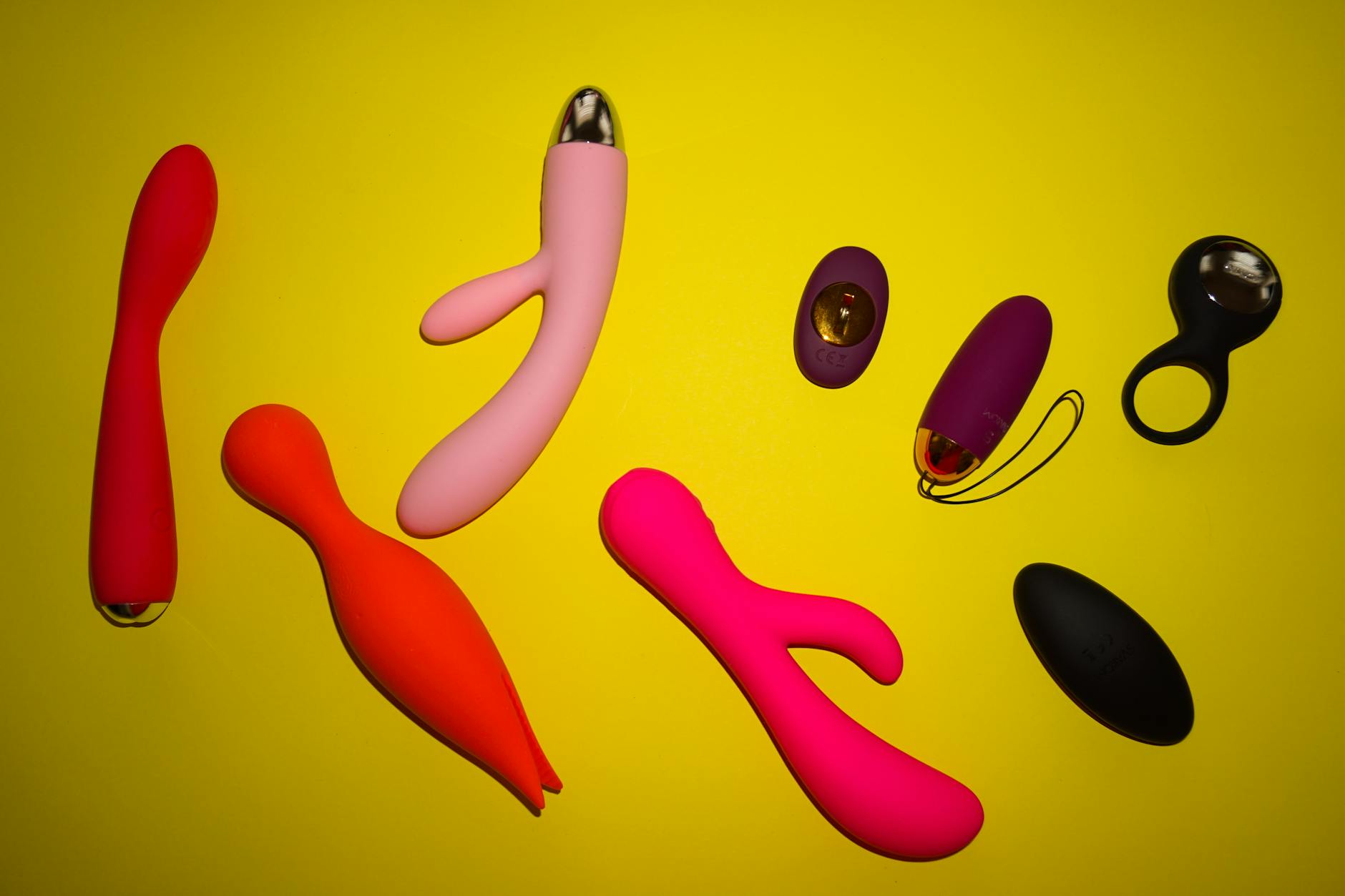
Here's the thing nobody talks about: their anxiety lives in your body
When your partner starts struggling with performance, something invisible happens to you. You stop focusing on what feels good and start monitoring them instead. Are they hard enough? Do they think you're taking too long? Should you speed things up to help them feel better? Before long, your orgasms don't just get harder to reach. They disappear entirely. And the cruelest part: you start thinking it's your fault.
It's not. What happened is that you absorbed their stress into your own nervous system, and your body downshifted into high alert mode. Orgasms can't happen when you're in that state. They require relaxation, presence, and the freedom to chase your own pleasure without managing someone else's feelings.
A lemon clitoral vibrator does something specific here: it gives you a way to practice pleasure that's completely independent of your partner's performance. It rebuilds the neural pathways for orgasm outside of the anxiety loop. And because lemon vibrators like the Lem use gentle suction rather than direct vibration, they're excellent at reaching pleasure centers that stress has numbed.
How partner performance anxiety kills your orgasms
When your partner starts having erectile difficulty, difficulty with stamina, or anything that makes them feel inadequate, your brain gets recruited into the problem whether you realize it or not. You become a kind of auxiliary performer, trying to manage their emotional state while also trying to feel something yourself. Your nervous system splits its bandwidth between two jobs: experiencing pleasure and caretaking.
Neuroscientists call this cognitive load. Your prefrontal cortex, the part that handles reasoning and emotional regulation, starts running the show instead of your limbic system, which handles sensation and arousal. That's why orgasms feel distant. Your brain literally can't compute both things at once.
Over time, this rewires your sexual response. Your clitoris gets less blood flow during arousal because your nervous system isn't routing energy there. Your pelvic floor tenses instead of relaxing. Your mind goes foggy during sex instead of sharper. This isn't weakness or a loss of attraction. It's a trauma response to chronic stress.
Why a lemon vibrator is specifically useful here
Three reasons lemon clitoral vibrators work particularly well for rebuilding pleasure after performance anxiety:
First: suction beats vibration when anxiety is involved. Direct vibration requires you to stay still and focus intensely. That's fine in a grounded state. When you're anxious, it can feel like being asked to sit quietly while your nervous system wants to run. Suction stimulation (the kind the Lem and other lemon vibrators provide) feels more like a wave or a pulse. It's gentler, less demanding, and your body can accept it even when you're not in perfect mental clarity.
Second: solo use resets the anxiety loop. When you're alone, there's nobody else's experience to manage. No performance to worry about. No one else's comfort to monitor. Your body remembers what it feels like to prioritize only your own sensation. This is the neurological antidote to anxiety-soaked partnered sex. Studies on sexual anxiety show that solo practice actually rewires your nervous system faster than talking about the problem.
Third: clitoral focus works. Your clitoris has 8,000 nerve endings, and most of them respond best to sustained, gentle stimulation rather than thrusting or direct pressure. When your nervous system has been in protection mode, your clitoris especially needs this kind of targeted, patient approach. A lemon clitoral vibrator gives you exactly that.
The rebuilding protocol: starting solo
Here's how to use a lemon vibrator to actually rewire your capacity for orgasm:
Week one: sensation mapping. Use your lemon vibrator (start with the Lem or another quiet option like the Berri) on the lowest setting for 10 minutes, three times that week. Don't aim for orgasm. Your only job is to notice where sensation shows up. Most people find the clitoral head responds first, then the clitoral hood, then the outer labia. Mark a mental map. This retrains your nervous system to register pleasure signals again.
Week two: rhythm building. Keep the same frequency but spend 15 minutes exploring what rhythm works. Many people anxious about performance unconsciously rush through masturbation. Slow it down. Let yourself take 10, 15, even 20 minutes. Your body needs to learn that pleasure doesn't have to be efficient.
Week three: escalation permission. Move to a medium setting if you want, but only if it feels genuinely good. If you're still in "trying to perform" mode, stay where you are. The goal is pleasure, not speed. Some people need six weeks at a low setting before they're ready to move up. That's normal and healthy.
Week four and beyond: integration. Once you're reliably having orgasms solo (even if they feel different than before, even if they're less intense), you're neurologically ready to reintroduce partnered sex. The difference now: you know your body still works. You've proven it to yourself without anyone else involved.
Bringing this back to your partner (when you're ready)
Let's be clear: using a lemon vibrator solo doesn't mean you're abandoning your partner or that you'll need it forever during partnered sex. You're healing. There's a difference.
When you do bring it back into partnered situations, frame it as collaboration, not compensation. A conversation that works: "I realized that a lot of my stress during sex comes from trying to manage how you feel. I want to focus on what I'm feeling instead. I'm going to use this during sex sometimes, and I'd like you to just enjoy watching me enjoy myself." This reframes the entire dynamic. Instead of you managing his performance, you're modeling pleasure. His job becomes witnessing yours, not carrying the whole weight of your orgasm.
Many partners find this actually reduces their own performance anxiety. When you're clearly having your own experience, they don't feel as responsible for your pleasure. The pressure on both of you drops.
Photo by cottonbro studio on Pexels
When this is a bigger relationship issue
Sometimes partner performance anxiety is situational. Stress from work, health issues, or life changes. Sometimes it's chronic, and the relationship dynamic is genuinely stuck.
If you're rebuilding your pleasure and your partner is also in their own anxiety spiral, they may need support too. A therapist who specializes in couples and sexual health (not just a general couples counselor, because this is a specific problem with a specific solution) can help him understand that his stress has affected you and teach him how to rebuild confidence without making your pleasure the proving ground.
What a lemon vibrator can't do: fix relationship communication problems or address underlying issues like infidelity, contempt, or power imbalances. If your partner's performance anxiety comes from deeper relationship wounds, that needs direct addressing. A vibrator is a tool for healing, not a substitute for the actual healing work.
The timeline for rebuilding
Most people report that their orgasms start feeling more accessible within three to four weeks of consistent solo practice. By week eight, many people report orgasms that feel similar to (or even better than) what they had before the anxiety cycle started.
However, your timeline might be different. If you've been managing your partner's anxiety for years, your nervous system may need longer to fully reset. That's not failure. That's just how trauma and nervous system rewiring work.
The key metric isn't "how fast" but "does it feel like I'm reconnecting to my body." If the answer after a month is yes, you're on track. If not, you might need to slow down even more or consider whether there are other stressors at play.
FAQ: What people actually ask about this
Will my partner feel threatened if I use a lemon vibrator solo?
Possibly, if he's still in the anxiety spiral. Many men who struggle with performance initially feel that a partner's vibrator use means they've failed further. This is why the conversation matters. Framing it as "I'm healing from the stress I absorbed" rather than "you weren't good enough" makes a real difference. If he responds with anger or control (refusing to let you have solo pleasure, for example), that's a red flag for a larger relationship problem that a vibrator can't fix.
How is this different from just using a vibrator normally?
It's not different, technically. But the mindset is. You're not using it as a backup for partnered sex. You're using it as a recovery tool. That distinction matters for your nervous system. When you approach solo play as "healing my relationship with my own body," you activate different brain regions than when you approach it as "trying to feel something before sex with my partner."
What if I still can't orgasm after a few weeks of using a lemon vibrator?
First, make sure you're not still in performance mode. Set a timer, use the lowest setting, and genuinely aim for 20 minutes of exploration with zero pressure. Second, consider whether there's a medical component. Antidepressants, hormonal birth control, and other medications can affect sensation. Third, talk to a therapist. Sometimes the anxiety is too deep to rewire alone, and that's okay. It just means you need additional support.
Can I use a lemon vibrator during partnered sex right away?
Technically yes. Practically, probably not yet. Your nervous system needs to know solo pleasure is possible first. Once that's established, using it during partnered sex can be genuinely connecting. Before that, it might just add another layer of performance pressure. Build your foundation first.
Does this mean I'm broken if I need a vibrator to orgasm now?
No. You're not broken. You've adapted to stress in a very normal way. Your nervous system downregulated to protect you from the emotional pain of managing your partner's anxiety. A lemon vibrator isn't a prosthetic for a broken body. It's a tool that helps your nervous system remember how to relax and feel again. That's repair, not compensation.
Will I always need the vibrator now?
Not necessarily. Many people find that after a few months of solo practice, they can have orgasms with or without it during partnered sex. Others prefer to keep it in the rotation, not because they need it, but because it feels good. That's a choice, not a dependency. Some of the best partnered sex happens when someone genuinely wants to be there, not when they feel obligated.
The real work is separate from the tool
A lemon clitoral vibrator can help your body remember pleasure. But the harder part is naming what happened and deciding you deserve to prioritize your own sensation again.
When you've spent months or years managing someone else's sexual insecurity, you absorb a quiet belief that your pleasure isn't important. That your job is to help them feel adequate. That if you can't orgasm easily, you should just try harder or be more patient.
None of that is true. Your pleasure matters. It's not optional. And it's not selfish to rebuild it independently of your partner's struggles.
Start solo. Rebuild the map. Give yourself permission to want what feels good, without managing anyone else's feelings. Once you've done that, partnered sex becomes something you choose to share, not something you endure while pretending to enjoy it.
That's when things shift. Not because a vibrator is magic, but because you've remembered that you're allowed to have your own experience.
If you're struggling to move forward on this, or if your partner's anxiety is tangled up with larger relationship issues, consider reaching out to talk through what's happening. Get in touch with me here to discuss strategies specific to your situation.