
Let's talk about clitoral sensitivity (for real this time)
Here's the thing nobody tells you: your clitoris is not like anyone else's. The sensitivity, the responsiveness, the patterns that actually work. It's wildly individual. Someone's perfect lemon vibrator could feel like too much for you, or like nothing at all. And that's completely normal.
I've worked with hundreds of people navigating pleasure, and the biggest mistake they make is buying what worked for a friend and then feeling broken when it doesn't work the same way for them. You're not broken. Your body just has different wiring.
Understanding your clitoral sensitivity baseline
Clitoral sensitivity lives on a spectrum. Some people have what I call "high-response clitorises" that light up from the gentlest touch. Others have what feels like a deeper, slower burn. Neither is better. Both deserve the right tool.
Three things shape your sensitivity: your nervous system (you're born with this), your hormones (they shift throughout your cycle, life stages, medication), and your mental state (stress genuinely dulls sensation; relaxation amplifies it).
Start by noticing what you already know about yourself. When you touch yourself without a toy, how much pressure do you naturally use? Are you someone who likes a light fingertip touch, or do you need firmer, broader pressure? Your answer is your baseline. That's where you start reading lemon vibrator specs.
The suction strength question
Unlike traditional vibrators that shake, lemon vibrators (including Hello Nancy's clitoral vibrators) use suction or pulsing air to stimulate tissue. This feels fundamentally different. It's less about friction and more about pressure and rhythm.
Suction strength comes in ranges. Lower suction settings are gentler and give you more control. Higher settings deliver more intense sensation quickly.
If you're someone with very sensitive tissue (maybe you find direct vibration uncomfortable, or you have vulvodynia, or you just prefer light touch), you'll want a clitoral vibrator with a lower minimum setting. You can always turn it up. You can't turn down a toy that starts too strong.
If you're someone who needs more sensation to feel anything, look for a toy with strong suction and plenty of pattern options. Variety matters because your body adapts. A pattern that feels incredible on day one might feel boring on day three.
Pattern variety and what it actually means
Most lemon vibrators come with multiple patterns. Pulsing, waves, escalating rhythms, constant suction. Here's why that matters: your nervous system genuinely does habituate. If you use the same pattern every time, your body learns it and needs more intensity to feel the same sensation.
The more patterns you have access to, the longer you can keep things feeling fresh and responsive. This isn't about novelty for novelty's sake. It's about how your nervous system actually works.
When you're shopping, look at what patterns are available. Some toys have 3 options. Some have 10. The more variation, the more you can explore without needing to buy multiple toys.
Body type and how it shapes what works
Clitoral anatomy varies. Some people have a clitoris that sits higher or lower. Some have more visible tissue. Some have what feels like a very concentrated point of sensation. Some feel sensation across a broader area.
A toy with a very small, pointed suction cup might feel incredible if your sweet spot is concentrated. It might feel too pinpoint if your sensation is more diffuse. A wider cup gives you more surface area and can feel gentler because the pressure spreads across more tissue.
If you've never used a suction toy before, starting with something designed for broader stimulation (like Hello Nancy's lemon clitoral vibrators) is often smarter than jumping to the most intense option.
Sensitivity changes throughout your cycle (yes, really)
If you menstruate, your clitoral sensitivity literally changes throughout your cycle. Right before your period, you might have much lower sensation threshold and actually prefer something more intense. During your follicular phase, you might be more sensitive to light touch. Mid-cycle, it can shift again.
This isn't something to fight. It's something to work with. If you have a toy with multiple intensity levels, you get to adjust. If you're choosing a single toy, pick one that works for your average sensitivity, not your extreme days.
What happened when you used other toys (listen to that data)
Think about any other vibrators or toys you've used. What felt too much? What felt like nothing? That's crucial information.
If you've found that strong vibrations hurt or feel overwhelming, suction toys (especially lemon vibrators with adjustable settings) are often more comfortable because they work differently. If you've found that light vibration does nothing for you, you probably need a toy with stronger suction or multiple intensity options.
Your past experience is data. Use it.
The beginner trap (and how to avoid it)
Most first-time users grab the cheapest option or the one with the most hype. That's backwards. Your first toy should match your body, not your budget. A $20 toy that doesn't work for you is money wasted. A tool that actually matches your sensitivity is money well spent.
If you're new to lemon vibrators specifically, look for something with a lower starting intensity, adjustable settings, and at least a few different patterns. Something that lets you explore gradually. You can always discover you want something stronger or different later. You can't un-know that something was uncomfortable.
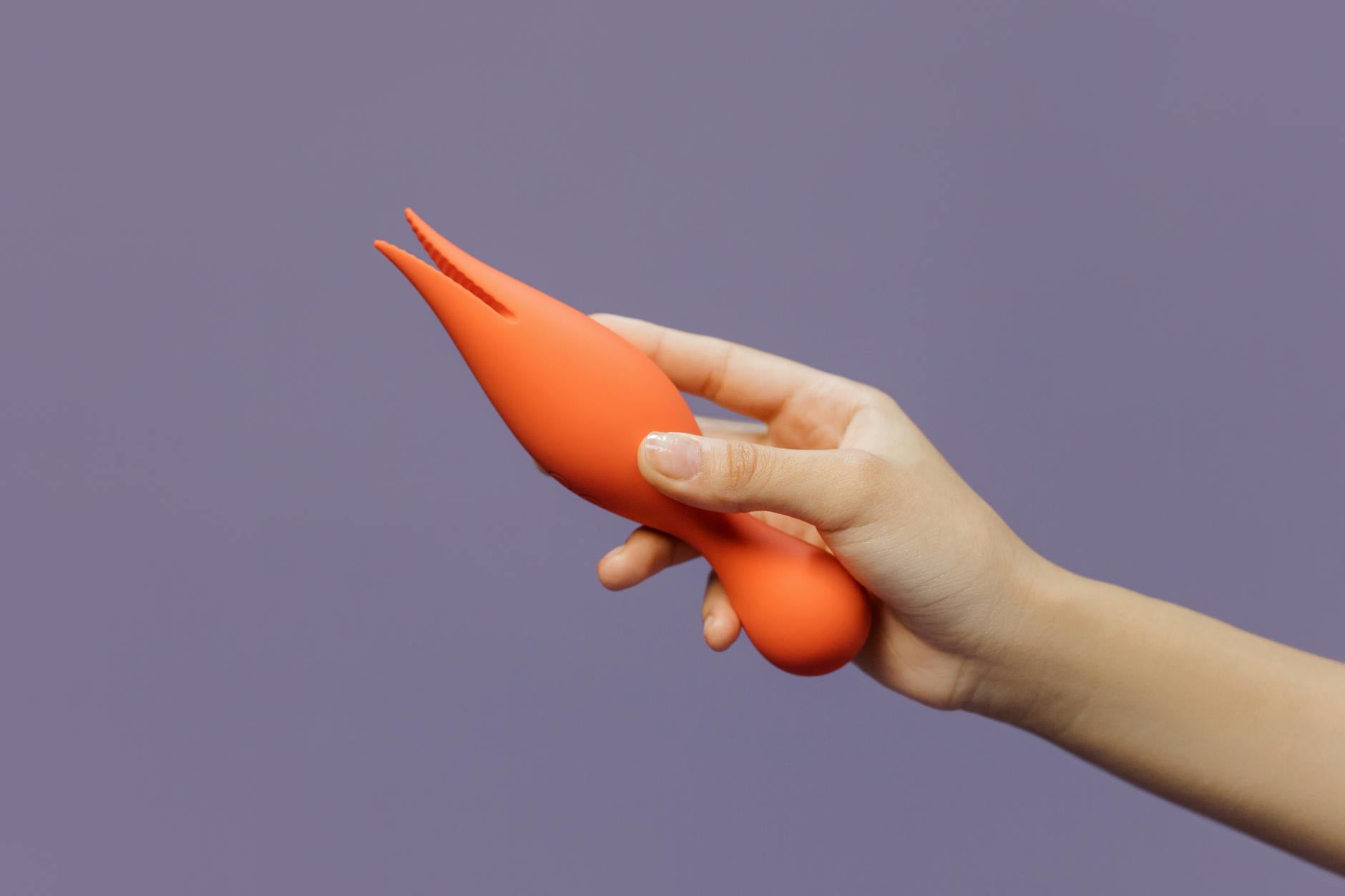
Photo by cottonbro studio on Pexels
When sensitivity is actually pain (important distinction)
There's a difference between "I prefer light touch" and "touch causes pain or burning." If stimulation causes pain, stop. That's important information. You might have vulvodynia, generalized hypersensitivity, or something else worth talking to a doctor about. Don't just white-knuckle through it with a toy.
Once you've ruled out pain as your baseline, then we're talking about preference and pleasure. That's what a lemon vibrator can unlock.
The testing-before-you-buy problem (and what to do instead)
Obviously you can't test a toy before buying it. So you're working with descriptions, reviews, and your own body knowledge. Here's what actually helps: read reviews from people who describe themselves as having sensitive skin or who mention that other toys were too intense. Not reviews that just say "amazing" with no detail.
Also, consider the return policy. Some retailers (Hello Nancy included) have straightforward policies because they know bodies are different. If there's a chance to return something that doesn't work, that removes some of the risk.
Medication, hormones, and sensitivity shifts
Antidepressants, hormonal birth control, and other medications can absolutely affect clitoral sensitivity. Some make sensation harder to access. Some change how pleasure feels entirely. This isn't a toy problem. It's a body-chemistry problem.
If your sensitivity has shifted since you started a new medication, that's worth discussing with your doctor. Sometimes dosage adjustments help. Sometimes you're learning your new baseline and need to give your body time to adapt.
When it comes to picking a toy, if you know your medication affects sensation, choose something with good range. You want options as your body figures out what it needs.
How to actually test sensitivity at home
Before you spend money on a new toy, do a sensitivity check. Use your hands. Light touch on the clitoral area. Medium pressure. Firmer pressure. Notice what feels good and what feels overwhelming. Notice the patterns your body actually responds to (rhythmic, constant pressure, pulsing, combinations).
That 10-minute exploration gives you so much information. You'll know if you're someone who needs constant sensation or if variation is better. You'll know if light touch is your thing or if you need more. That becomes your shopping guide.
Real talk about trying new intensities
If you've been using very light touch for years and suddenly want to explore stronger sensation, give yourself time. Your nerve endings aren't damaged by being sensitive. But they do need gradual introduction to new input. Start lower than you think you need. Build from there. Your body's responsiveness can shift pretty quickly once you start exploring safely.
FAQ: Your actual questions answered
What if I have a very sensitive clitoris and most vibrators feel overwhelming?
Lemon vibrators are actually often gentler than traditional vibrators because suction feels different than vibration. The sensation spreads across tissue rather than concentrating it. Start with the lowest setting on a toy with adjustable intensity. You're not looking for the strongest thing available. You're looking for something with good control. If it's still too much, you might also benefit from using it over underwear at first, which softens sensation while you adjust.
Can clitoral sensitivity change from one day to the next?
Absolutely. Your menstrual cycle, stress level, hydration, sleep, where you are in your day. All of it affects sensitivity. This is why a toy with multiple intensity options is genuinely better for most people. On high-sensitivity days, you turn it down. On days when you need more, you turn it up. One toy, infinite adaptation.
Is there a lemon vibrator that works for both high and low sensitivity?
Yes. Look for toys with a wide range of intensity levels and multiple patterns. Hello Nancy's lemon clitoral vibrators are designed with this in mind. The point is flexibility. You're not picking one setting and staying there forever.
What if I've never had an orgasm and don't know my sensitivity?
Start with something designed for first-time users. Gentle, intuitive, not too intense. Spend time exploring without pressure to achieve anything. Your body will teach you what it needs. Sensitivity and capacity for orgasm are different things anyway. You might discover you're sensitive and take longer to climax, or you're less sensitive and come very easily. Both are normal.
Does lube change clitoral sensitivity?
Yes, but not in a bad way. Water-based lube makes sensation feel smoother and can reduce any friction discomfort. It also makes suction toys work better because the seal is easier to maintain. If you're trying a new toy and worried about sensitivity, adding a little lube can actually make the experience more comfortable, not less.
How do I know if I should try a stronger toy or if I just have low sensation needs?
There's a difference. Low sensation needs means you prefer gentler input. That's your baseline. Trying to force yourself into a stronger toy won't change that. A stronger toy is useful if you've plateau'd on your current one and genuinely want more. But if light touch is genuinely pleasurable for you, that's not a problem to solve. That's your answer.
The real ending
Choosing the right lemon vibrator isn't about picking the most popular model or the one with the most features. It's about understanding your body well enough to know what it actually needs.
Start with honesty about your baseline. Notice what you know about your own pleasure. Read descriptions carefully. Pick something with flexibility and room to explore. Then trust your body to tell you if it's right.
If you want to talk through options or have questions about what might work for your specific situation, we're here to help. Your pleasure matters. Getting it right the first time is worth the thinking.
Related reading:
If you're exploring suction toys for the first time, learn what makes lemon clitoral vibrators feel different from traditional vibration. And if you're shopping with a partner, here's how to talk about what you actually want without awkwardness.